
Finding the best yanagiba knife set demands more than skill; it requires the right steel, blade, and handle length, bevel, sharpness, and more. Without a complete sushi knife set, making perfect sashimi with a delicate texture is difficult.
That’s why, after several weeks of researching over 25 sets and rigorously testing 13 of them, I found only a handful that deliver razor-sharp precision, effortless slicing, and the control every roll deserves.
Whether you’re a home cook or seasoned chef, my recommended high-quality sushi knife sets will definitely transform your kitchen into an authentic Japanese culinary experience.
Key criteria I followed when selecting the best sashimi knife sets:
- Reputable brands specializing in sushi knife sets
- Crafted from top-notch steel for a razor-sharp edge
- Easy to sharpen and retains its edge for daily use
- Must-have sushi knives for sashimi preparation at home
- Well-designed and sized for all hands for easy fitting and control
- Perfectly balanced handles reduce fatigue during long prep sessions
- Lifetime warranties reflecting the manufacturer’s confidence in quality
Best Sushi Knife Set – Top List
Best Sushi Knife Set
1. MSY BIGSUNNY 3-Piece German High Carbon Stainless Steel Sushi/Sashimi Knife Set – Brown

My German sushi knife set arrived earlier than expected and was securely sealed. Inside the box, each of the three knives was carefully wrapped and well protected. Everything looked flawless right out of the package.
Knife Set Includes: 10-inch Yanagiba knife, 7-inch Deba knife, and 5-inch Utility knife
Blade: The blades are crafted from high-carbon German stainless steel (DIN 1.4116) with a brushed finish and traditional hand-forged construction. Each knife features a single-bevel grind at approximately 15–20 degrees. All three arrived razor-sharp and ready to use straight out of the box.
Cutting Performance: I spent several months testing this set on a variety of prep tasks. I started with whole kingfish, using the deba knife to work carefully along the backbone. It split through cleanly with controlled pressure and very little effort. When breaking down chicken, it moved through joints smoothly while maintaining excellent control. I also used it on pork ribs, where it handled deliberate, precise cuts without issue.
For raw salmon and larger cuts of boneless meat, the yanagiba performed beautifully. Its long blade allowed for clean single-pull slices without tearing the delicate flesh. When portioning whole mackerel for sashimi, the slicing motion stayed consistently smooth from tip to heel.
The utility knife handled smaller prep tasks equally well. It made quick work of thin cucumber strips and light vegetable prep, gliding through with smooth, precise cuts and no noticeable drag.
After several weeks of regular fish prep, the edges held up impressively well. When they eventually started to lose some bite, a quick touch-up with my whetstone restored the sharpness with minimal effort.
Handle: The solid rosewood handles feel durable and well made, with a smooth ergonomic oval shape and tight fit around the tang. There are no rough edges or gaps in the construction. Even with my larger hands, the grip feels secure and comfortable without slipping.
Although these are not full-tang knives, they still feel stable and dependable for their intended purpose. The balance between blade and handle feels natural, which helped reduce fatigue during longer prep sessions.
Maintenance: I always hand wash these knives with warm soapy water and dry them immediately with a towel. I never put them in the dishwasher. For storage, I keep them on a magnetic strip or in a knife block, and I avoid using them on glass or marble cutting surfaces.
For sharpening, I use a two-stage whetstone process, starting with 1000–3000 grit and finishing with 6000–8000 grit, maintaining a 15–20 degree angle on the beveled side only. I also occasionally use a honing steel between sharpenings to keep the edge aligned.
Pros
- Razor-sharp straight from the box
- Impressive edge retention over time
- Easy to resharpen with a whetstone
- Beautiful rosewood handle finish
- Well-balanced weight distribution
- Three knives cover key tasks
- Replacement guarantee included
- Outstanding value for the price
Cons
- Right-handed single bevel design only
- Not suitable for heavy chopping
- Not a full tang handle
2. YOSHIHIRO 6-Piece Japanese VG-10 16-Layer Hammered Damascus Steel Sushi Knife Set
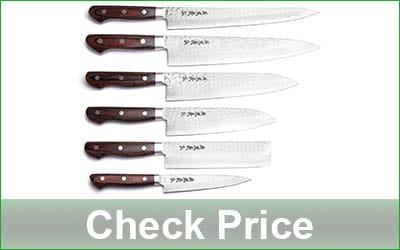
My package came two days early, each knife packed in its own clean, sturdy box with protective sleeves. Every blade was secure, scratch-free, and looked polished and refined right out of the packaging.
Knife Set Includes: 8.25″ Gyuto chef knife, 9.5″ Gyuto chef knife, 5.3″ Petty knife, 7″ Santoku knife, 9.5″ Sujihiki/Slicing knife, 6.5″ Nakiri knife.
Blade: Japanese premium VG-10 core with a 16-layer hammered Damascus finish, hardened to 60 HRC and forged by hand in Japan. Double-bevel edge at around 10–12 degrees. Each blade arrived extremely sharp and ready for immediate prep work.
Cutting Performance: Over several weeks of regular testing, I worked through larger prep tasks using different knives from the set. Slicing whole salmon fillets with the sujihiki in long, single strokes felt clean and controlled, with no tearing at any point. The nakiri moved straight down through butternut squash and sweet potatoes with less force than expected, staying stable without twisting.
Using the 9.5″ gyuto, I carved roasted chicken, shredded cabbage, and diced carrots into clean, even cuts. The santoku handled onions, bell peppers, and boneless meats with steady control, and the hammered finish helped reduce sticking during repeated cuts. For smaller prep, the petty knife gave me clean, accurate cuts on herbs and garlic without bruising. After six weeks of consistent use, the edges held well with no noticeable dullness.
Handle: The mahogany handles with a triple-riveted Western design fit naturally in my hand without adjustment. The full tang construction runs through the handle, giving each knife a stable and balanced feel. Weight distribution stays even and never feels tip-heavy, which helped reduce fatigue during longer prep sessions.
The surface has a smooth, polished texture with subtle ergonomic shaping that stays comfortable and secure during dry use. Craftsmanship is clean, with no rough spots or gaps where the handle meets the blade. Across different hand sizes, the grip feels consistent and controlled.
Maintenance: I hand-wash each knife and dry it immediately with a towel, especially after cutting acidic ingredients. These are not dishwasher safe. Since no block is included, I store them on a magnetic rack. I avoid bones, frozen foods, and hard surfaces.
I sharpen them with a 1000–3000 grit water whetstone, finishing with a higher grit. I maintain a 10–11 degree angle on the right side and 11–12 on the left, and I avoid using honing steels as recommended.
Pros
- Premium VG-10 steel holds edge
- Stain-resistant Damascus steel finish
- Clean, precise slicing across foods
- Hammered finish reduces food sticking
- Mahogany handle feels warm, secure
- Full tang offers strong balance
- Handcrafted in Japan quality build
- Complete versatile six knife set
Cons
- No storage block included
- Requires careful maintenance routine
- Needs water stone sharpening only
- Higher price compared to basic sets
3. KAKUSEE 6-Piece Stainless Steel Japanese Sushi/Sashimi Knife Set with Wooden Box Case

The package arrived right on time in a well-sealed brown box with no visible damage. Inside, a natural wood display case held all five knives securely, each protected with its own blade cover.
Knife Set Includes: 10″ Chef’s knife, 12″ Sushi/Sashimi knife, 10.5″ Vegetable nakiri knife, 6″ Petty knife, 5″ small Deba knife, and a natural wood storage box.
Blade: The stainless steel blades feature a stamped construction and came razor-sharp straight out of the box. The thin Asian-style profile holds a 15–20 degree edge angle, making them ready for immediate use.
Cutting Performance: Over several weeks of use, I put the set through a range of tasks. The chef’s knife handled boneless chicken and vegetables like onions, carrots, cabbage, and peppers with smooth downward strokes, without dragging or tearing. The nakiri worked especially well on zucchini, delivering flat, controlled cuts with a precise feel.
The sashimi knife sliced through salmon in a single, long pulling motion, producing clean, even cuts without ragged edges. Using the sushi knife on bacon was quick and efficient, with consistent results.
The petty knife performed well for detailed work like garnishing herbs and slicing small items such as garlic and chilies, offering good control. The small deba made fish filleting simple and manageable. Edge retention remained consistent over weeks of regular use, though I used a honing rod weekly to maintain sharpness.
Handle: The handles are plastic with a wood-grain finish. They feel light in hand with decent balance across all five knives, and the sizing works well for different hand sizes without feeling awkward. The grip stays comfortable and secure during extended cutting sessions, especially in dry conditions.
However, after about two months of daily use, the coating began to show flaking. These are partial-tang knives, which may affect long-term durability, though handling remains stable for everyday kitchen tasks.
Maintenance: After each use, I hand wash only and avoid the dishwasher. I dry the blades immediately with a cloth or paper towel to prevent rust, which can develop quickly if left wet. I store them in the included wooden box or on a magnetic strip. I also avoid cutting on glass or stone surfaces.
To maintain the edge, I recommend using a 1000–3000 grit water stone for regular maintenance, followed by a 6000+ grit stone for finishing. A honing rod between uses helps keep the edge aligned.
Pros
- Arrives razor-sharp, ready to use
- Clean, precise cutting performance
- Versatile selection of knife types
- Comfortable and balanced in hand
- Lightweight with easy control
- Simple to sharpen and maintain
- Includes attractive wooden storage box
- Excellent value for the price
- Great for beginners and home cooks
Cons
- Prone to rust without proper drying
- Handle coating chips over time
- Not a full tang construction
- Plastic handles instead of real wood
4. KAMIKOTO Kanpeki 3-Piece Japanese SUS420J2 Stainless Steel Slicing/Sushi Knife Set
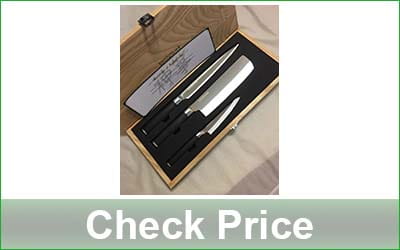
I received it right on time from the delivery person in a natural-colored ash wood box, well protected, beautifully finished, and sturdy, with all three knives sitting securely inside alongside a hand-signed Certificate of Authenticity.
Knife Set Includes: 7″ Nakiri knife, 8.5″ Slicing knife, 5″ Utility knife, and natural ash wood presentation box.
Blade: Made from SUS420J2 Japanese alloy steel with a satin finish, rated HRC 53 ±2. They feature a single-bevel edge around 15–17°, sharp enough to use straight out of the box and ready for immediate use without any additional prep.
Cutting Performance: I’ve been using this set for several weeks, mainly for Korean home cooking, which requires consistent precision. The 8.5-inch slicer moves through beef and chicken cleanly using a smooth pull-cut motion, and thin-sliced bulgogi comes out even every time.
The 7-inch Nakiri handles push-cutting vegetables like whole potatoes and leafy greens without resistance, leaving flat, clean cuts with no tearing. For sashimi prep, the slicing knife follows its single-bevel design naturally, especially during fish work, producing clean cuts with almost no drag.
The 5-inch utility knife handles smaller tasks like trimming scallions and slicing garlic and soft fruits. I used short push and tap cuts lengthwise with good control. After six weeks of regular use, the edges still perform well on vegetables and boneless proteins. Bone-in cuts caused visible chipping, so I avoid those tasks with this set.
Handle: The wooden handle has a smooth satin finish with no sharp edges or awkward shaping. The full tang runs through the entire handle, and the weight feels balanced around the bolster, which kept my hand comfortable during longer prep sessions. It fits smaller hands well without strain. Even with wet hands during fish prep, the grip stayed secure without slipping.
Maintenance: I hand wash each knife right after use with warm, soapy water and dry them immediately with a cloth to avoid water spots. These are not dishwasher safe. I store them back in the ash wood box when not in use. I avoid hard surfaces and never use them on bones.
I typically sharpen them using a 1000–3000 grit whetstone for regular upkeep and finish with a 6000+ grit stone. I maintain a 15–17 degree angle on the single-bevel side only. I don’t use honing rods and occasionally apply oil to the wood handle.
Pros
- Arrived in premium wooden box
- Steel sourced from Honshu, Japan
- Clean, precise slicing performance
- Holds edge well after weeks
- Balanced weight improves cutting control
- Comfortable grip even with wet hands
- Includes signed authenticity certificate
- Great for vegetables, meat, and fish
- Looks premium with a satin finish
Cons
- Not suitable for bone cutting
- Surface scratches with regular use
- Requires specialized single-bevel sharpening
5. SHANGDAO 3-Piece German DIN 1.4116 Stainless Steel Japanese Sushi Knife Set
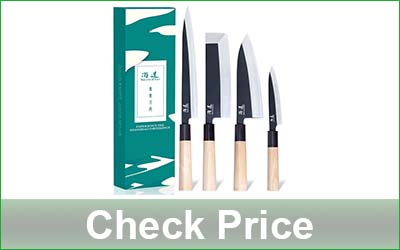
I received the set a day early in a well-packed, presentation-ready box, and it held each knife securely with no damage on arrival. Everything looked premium right away, and all four knives came sharp and cleanly finished.
Knife Set Includes: 10″ Yanagiba knife, 7.6″ Deba knife, 7.6″ Nakiri knife, 5.7″ Utility knife
Blade: The blades use DIN 1.4116 German stainless steel with a 56–58 HRC hardness, traditionally forged and thermally treated for strength. Each single-bevel edge is razor-sharpened around 15–17°, arriving ready to use without any additional prep.
Cutting Performance: I started with the Yanagiba on fresh salmon, pulling it in one smooth stroke from heel to tip – the slice came out clean with no tearing in the flesh. On tuna loin, the same pull-cut technique produced thin, even pieces without any drag.
For whole fish prep, I used the Deba to break down a sea bass – it moved cleanly through the spine without requiring force. I also tested chicken breast and soft beef cuts, and the edge remained consistent without crushing the fibers.
I used the Nakiri on daikon radish with a straight up-and-down chop, and it cut through cleanly without splitting or wedging. For smaller tasks, I relied on the utility knife for citrus, cucumber, and avocado, handling detail work without any issues. After six weeks of regular use, the edges still bite cleanly into paper, with no noticeable rollover or dullness.
Handle: The maple wood handle has a smooth, polished finish with no rough transitions near the blade. It sits naturally in a pinch grip without shifting during longer prep sessions and doesn’t feel slippery, even with slightly wet hands.
The 5.5 inches size suits medium to large hands – not too thick, not too slim. The weight leans slightly toward the blade, which supports efficient pull cuts. Over time, I noticed reduced hand strain, though I made sure to keep the handle dry after washing.
Maintenance: I hand wash the knives using mild soap and warm water, then dry them immediately with a towel. I avoid the dishwasher entirely. I store them on a magnetic strip to protect the edges.
For sharpening, I use a 1000/6000 grit whetstone at a 15–17° angle, along with a regular honing steel between uses, sometimes switching to a ceramic rod. I also apply food-grade mineral oil occasionally to prevent the maple handle from drying.
Pros
- Cryogenic-tempered German steel blade
- Clean slicing for fish and meat
- Good edge retention after weeks of use
- Comfortable, solid, well-finished maple handle
- Balanced feel across all knives
- Traditional design with clean finishing
- Replacement support if issues found
- Great sushi knife set at a low price
Cons
- Limited knife variety in this set
- Not ideal for heavy-duty cutting
- Specialized set, limited everyday versatility
6. WILDMOK 4-Piece German Stainless Steel Sashimi/Sushi Knife Set
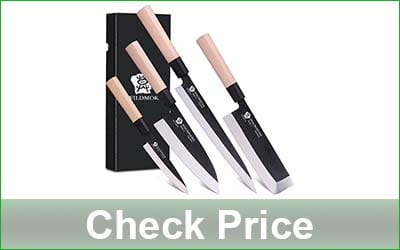
The set arrived right on schedule in a clean, well-protected black gift box. The packaging felt premium and clearly gift-worthy. Each knife looked sharp and well-polished straight out of the box, with no visible defects or imperfections.
Knife Set Includes: 10″ Yanagiba knife, 7″ Deba knife, 7″ Nakiri knife, 5″ Utility knife
Blade: The blades are made from German stainless steel with a 56–58 HRC hardness, forged and ice-tempered for durability. The Yanagiba is set at 15°, the Deba at 18°, the Nakiri at 16°, and the Utility at 15° – all arriving sharp and ready to cut immediately.
Cutting Performance: I started testing with the Yanagiba, slicing through a fresh tuna loin in one clean stroke – no drag, no tearing, just a smooth, precise cut. On salmon fillet, the same pull motion gave me thin, even slices without breaking the flesh.
The Deba handled a whole sea bass confidently; cutting through the spine required firm but controlled pressure, and the blade moved cleanly through bone. For vegetables like cabbage and potatoes, I used the Nakiri on daikon with a straight downward chop – it cut cleanly without wedging.
For smaller prep tasks, I used the utility knife on tomatoes, avocado, and cucumber with short, controlled strokes. After eight weeks of regular use, only the Nakiri became slightly dull due to heavy use, while the other knives still cut cleanly with no noticeable edge rollover.
Handle: The handle is crafted from hard maple wood with a smooth, refined finish and no rough spots near the bolster. The full tang construction feels solid and stable in hand, supporting a natural pinch grip. At 5.5 inches, it fits comfortably for medium to large hands. The balance sits slightly forward toward the blade, which works well for pull-cut techniques. The lightly textured surface improves grip, even with slightly wet hands – especially on the Nakiri, where it noticeably reduces fatigue during bulk vegetable prep.
Maintenance: I always hand wash these knives using warm water and mild soap, then dry them immediately with a towel – never leaving them wet on the counter. They are not dishwasher safe. I store them in a knife block to protect the edges and avoid cutting on hard surfaces like glass or stone.
For touch-ups, I use a 1000/6000 grit whetstone, maintaining each knife’s specific angle, along with a standard honing steel between sessions. I also apply mineral oil occasionally to keep the wood handle from drying out.
Pros
- Ice-tempered German steel blade
- Clean slicing for raw fish
- Handles dense vegetables with control
- Comfortable grip during long prep
- Well-balanced across all four knives
- Full four-knife sushi prep coverage
- Elegant black gift-ready packaging
- Easy to sharpen with whetstone
- Replacement offered for quality issues
Cons
- Not suitable for heavy-duty chopping
- Wood handle needs occasional oiling
- Specialized set limits general use
FAQs About the Best Sushi Knife Set
Question: What knives are typically included in the best sushi knife set?
Answer: A good sushi knife set typically includes a yanagiba for slicing, a deba for fish butchery, and a usuba for vegetables, covering most traditional sushi preparation tasks effectively very well.
Question: What type of steel is best for sushi knives?
Answer: High carbon stainless steel is preferred because it balances sharpness, edge retention, and corrosion resistance, making it easier to maintain while delivering precise, clean cuts required for delicate sushi ingredients.
Question: What should beginners look for in a sushi knife set?
Answer: A beginner should look for a balanced set with comfortable handles, moderate blade lengths, and easy maintenance features, ensuring control, safety, and versatility while learning sushi preparation techniques at home.
Question: Can a sushi knife set be used for general kitchen tasks?
Answer: Yes, a sushi knife set can be used for kitchen tasks, but it performs best with fish, vegetables, and precise slicing, rather than heavy-duty cutting like bones or frozen foods.
Question: How do you properly maintain a sushi knife set?
Answer: Proper maintenance includes regular honing, occasional sharpening with a whetstone, gentle hand washing, immediate drying, and safe storage, all of which preserve blade sharpness, longevity, and overall performance over time.
Question: What makes Japanese sushi knives different from Western knives?
Answer: Japanese sushi knives differ from Western knives in their thinner blades, sharper edges, and single-bevel designs, allowing more precise cuts, cleaner slices, and better presentation of delicate fish and ingredients.
Question: How much should you spend on a good sushi knife set?
Answer: A sushi knife set can range from affordable beginner options to premium handcrafted collections, with prices reflecting materials, craftsmanship, and brand reputation, so choosing depends on budget and experience level.
Question: Why is full tang construction important in sushi knives?
Answer: Full tang construction is important because it provides balance, strength, and durability, ensuring the knife feels stable in hand and withstands regular use without loosening or breaking over extended periods.
Question: What is the purpose of a yanagiba knife in a sushi set?
Answer: A yanagiba knife is designed for slicing fish in long, single strokes, producing smooth, glossy cuts that preserve texture and appearance, which is essential for high-quality sushi and sashimi presentation.
Question: What is the best way to store a sushi knife set?
Answer: Storing sushi knives in a block, magnetic strip, or protective sheath helps prevent blade damage, maintains sharpness, and improves kitchen safety by reducing accidental contact with the sharp cutting edge.