There are many fake and cheap Japanese Cleaver Knives in the market. Even for a pro chef, finding a genuine product can be difficult.
I have made this list after analyzing 30+ Japanese steel cleavers. The factors that I prioritized in making the list are:
- Brands that are skilled in making Japanese cleaver
- Blade made from high-quality and genuine Japanese steel
- The handle is full-tang and well-balance
- Also, it is non-slip, easy to hold and maneuver
- Cleaver Comes with a rock-solid lifetime warranty
Best Japanese Cleaver Knife – Top List
Best Japanese Cleaver Knife
1. HOSHANHO 7-Inch 10Cr15CoMoV High Carbon Steel Japanese Cleaver Knife
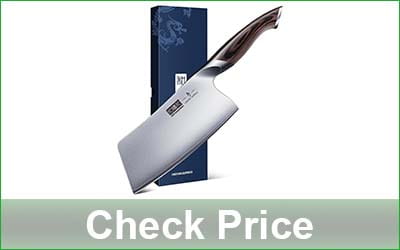
Delivery arrived later than I expected, but it came in a solid black gift-style box with secure interior wrapping. Opening the box, the knife looked clean and flawless with a professional finish, no sleeve or sheath.
Blade Quality & Craftsmanship: The 7-inch blade is precision-forged from Japanese 10Cr15CoMoV high-carbon stainless steel with a polished finish, rated at 58±2 HRC and a 15-degree plain edge. It came factory-sharp, slicing paper cleanly and ready for immediate kitchen prep out of the box.
Real-World Performance Testing: I tested this Japanese cleaver knife almost daily for several weeks, starting with root vegetables. Whether dicing potatoes, slicing carrots, or chopping onions, it glided through with zero resistance using both push-cuts and rocking motions. The thin blade moved easily through tomatoes and cabbage, and butternut squash cut cleanly with one press and light sawing motions, creating even slices without crushing layers. For smaller prep, I minced garlic with quick rock-chop motions, chopped herbs, and diced shallots with steady control.
It sliced beef strips cleanly and handled fish fillets with a smooth forward draw stroke, giving thin, clean cuts without tearing. Whole chicken pieces were cut through the soft meat accurately, though I kept the blade away from hard bones entirely.
Edge Retention: After several weeks of daily kitchen use, the edge remains sharp and has not required any major sharpening so far.
Handle Ergonomics: The Pakkawood handle has a smooth ergonomic shape with full-tang construction and clean finishing throughout. It fits naturally in the hand without pressure points or pinching, and the weight distribution between blade and handle keeps the knife balanced during longer prep sessions. The grip feels comfortable even with larger hands, though a bit more texture would improve slip resistance when working with wet ingredients for safety and control during use.
The Storage: No sheath or blade cover comes included so you can buy a separate knife sheath independently your necessary. I stored the cleaver separately on a dry knife rack. The polished blade stayed protected, though a ventilated protective sleeve would improve long-term edge safety overall protection.
Maintenance & Care Routine: I hand wash the Japanese cleaver with mild soap, dry it right away with a towel, and never leave it sitting wet in the sink. I only use wooden cutting boards, avoid bones, and keep it out of the dishwasher. I sharpen it with a 1000/3000 grit whetstone at a 15-degree angle, and maintain the edge with a ceramic honing rod.
Pros
- Arrives razor-sharp, ready immediately
- Forged Japanese steel construction
- Clean slicing through vegetables
- Smooth rocking chopping performance
- Strong edge retention after weeks
- Comfortable Pakkawood handle grip
- Excellent balance during chopping
- Premium polished blade appearance
- Gift-ready premium presentation box
Cons
- No protective sheath included
- Blade can chip on bones
- Handle lacks extra grip texture
- Not suitable for dishwasher use
- Curved edge limits straight chopping
2. IMARKU 7-Inch High Carbon Stainless Steel Japanese Meat Cleaver Knife
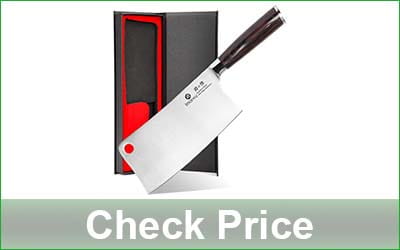
My order showed up two days ahead of schedule, which caught me off guard in a good way. The knife came packed inside a sturdy dark gift box with soft velvet lining and thick bubble wrap holding everything firmly in place. Right out of the box, the cleaver looked clean, polished, and expensive enough to hand over as a gift without changing a thing.
Blade Quality & Craftsmanship: The 7-inch blade is forged from Japanese high-carbon stainless steel with a polished finish. It carries a 57±1 HRC hardness rating and features a hand-sharpened 15° double-bevel edge using clay-tempered heat treatment. Out of the package, the blade felt extremely sharp and fully prepared for slicing, chopping, and meat prep.
Real-World Performance Testing: I used this cleaver for over six weeks on pork ribs with heavy downward chops and chicken thighs with controlled bone cuts, and it cut through cleanly without stalling or blade deflection. Celery bunches and raw corncobs also cut smoothly without slipping off the edge.
On the vegetable side, the cleaver pushed through dense whole cabbage with smooth push-cutting motions, while thick bundles of celery offered very little resistance. Thick carrots that usually fight back against thinner blades were handled in single, controlled strokes.
For smaller prep tasks, I crushed garlic with the wide blade face, minced ginger and herbs using rocking cuts, and diced onions evenly with smooth forward slicing strokes. The blade carried enough weight to move through tougher ingredients without putting extra strain on my wrist.
Edge Retention: After weeks of regular cooking, the edge still stayed impressively sharp and continued slicing vegetables smoothly with very little drag. I only needed a quick touch-up to keep it performing well.
Handle Ergonomics: The FSC-certified pakkawood handle has a smooth contoured shape with full tang construction and seamless finishing throughout. The handle feels lightly oiled instead of overly coated, giving it a more natural grip texture. At roughly 12 inches overall, the size feels comfortable in hand, and the shape reduces fatigue during longer prep sessions. The balance leans slightly toward the blade, which works well for a cleaver. Both left- and right-handed grips feel stable and secure.
The Storage: The Japanese cleaver knife does not include a sheath, though the velvet-lined gift box works well for safe storage. It keeps the blade protected from accidental contact, dust, and moisture buildup between uses.
Maintenance & Care Routine: I wash the cleaver by hand using mild soap, dry it immediately, and keep it stored inside the original box. I stay away from dishwashers, frozen foods, and glass cutting boards. A thin coat of food-safe oil after cleaning helps maintain the finish. For sharpening, a 1000/3000 grit whetstone at a 15° angle per side gives the best results, while a ceramic honing rod helps maintain the edge between sharpenings.
Pros
- Extremely sharp right out of the box
- Strong chopping control on vegetables
- Cuts meat cleanly with solid power
- Full tang build with dependable edge retention
- Comfortable and balanced pakkawood handle
- Works well for meat, vegetables, and light bone work
- Premium velvet-lined presentation box
- Includes an 18-month warranty
Cons
- No blade sheath included
- Not designed for very hard bones
- Knife must be hand washed only
- Some users reported minor blade chipping
3. MATSATO 5.8-Inch 3CR13 Stainless Steel Japanese Meat Cleaver Knife
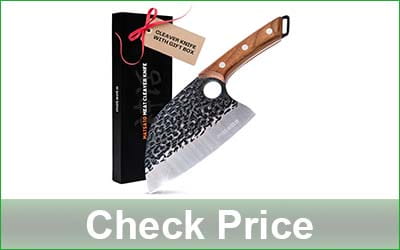
My cleaver arrived overnight in a clean black gift box with no dents or damage. The knife sat securely inside without a sheath or extra blade wrap. It looked polished right out of the package and felt ready for immediate kitchen use.
Blade Quality & Craftsmanship: The 5.8-inch forged Japanese 3CR13 stainless steel blade has a hammered finish with an ice-hardened plain edge. It came razor-sharp and fully usable out of the box, slicing cleanly without any initial sharpening.
Real-World Performance Testing: I used this Japanese cleaver knife for weeks of regular kitchen prep. I started by breaking down a whole chicken and turkey sections. The blade moved through joints with controlled downward chops and clean separation without repeated strikes. I then sliced thick beef strips, and the edge passed through muscle fiber with very little resistance. Chopping pork rib sections took controlled downward strokes, and the blade stayed stable without deflecting.
It handled dense vegetables like butternut squash and cabbage with firm pressure, staying straight and controlled through each cut. Dicing onions produced clean, even pieces with minimal sticking to the hammered surface. The finger-hole grip gave strong control during longer prep work. For smaller tasks, I diced garlic, green onions, and mushrooms using quick push cuts and a smooth rocking motion for precise results.
Edge Retention: After several weeks of regular use on meat, bones, and vegetables, the edge stayed impressively sharp with only light honing needed.
Handle Ergonomics: The carbonized beech wood handle feels warm, smooth, and naturally shaped in hand. The joint between handle and blade is tight with no gaps or flex. The finger-hole design adds extra grip security during heavy chopping, especially with poultry joints. The forged balance reduces wrist strain, and the 176g lightweight build makes longer prep sessions easier. The wood surface remains comfortable even with damp hands.
The Storage: This cleaver does not include a sheath or blade cover. I store it on a magnetic strip using the hanging hole, which keeps the edge protected and dry between uses.
Maintenance & Care Routine: I hand wash the cleaver with warm soapy water, dry it immediately with a towel, and never leave it wet. It never goes in the dishwasher. I occasionally condition the beech wood handle with food-grade mineral oil. I use wooden cutting boards only, avoid frozen foods, and sharpen it with a 1000/3000 grit whetstone at a 15-degree angle. A ceramic honing rod keeps the edge aligned between sharpenings.
Pros
- Razor-sharp straight from package
- Excellent balance for chopping
- Strong cutting power on bones
- Hammered finish reduces sticking
- Edge holds well between sharpenings
- Finger-hole grip locks hand position
- Attractive carbonized wood handle
- Lightweight without feeling flimsy
- Attractive gift-ready box packaging
- Handles both meat and vegetables well
Cons
- No sheath or blade cover
- Handle needs occasional oiling
- Hand wash only, no dishwasher
4. HUUSK 7-Inch High Carbon Steel Japanese Meat Cleaver Knife
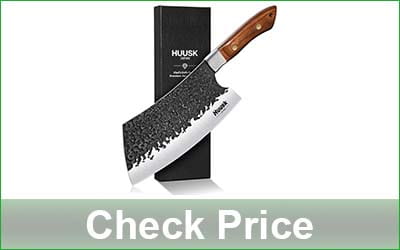
My package showed up a day ahead of schedule in perfect condition inside a premium black presentation box that already looked gift-ready without needing extra wrapping. Inside, the 7-inch hammered cleaver was neatly secured and immediately stood out with its clean finish and solid feel – though no blade cover was included.
Blade Quality & Craftsmanship: The 7-inch hand-forged Japanese high carbon steel blade uses a hammered finish, plain edge, 15-degree grind, and 58±2 HRC hardness. Out of the box, the edge felt razor sharp, evenly ground, nicely balanced, and fully ready for serious kitchen prep.
Real-World Performance Testing: I tested this cleaver for several weeks on everything from pork ribs to chicken and turkey bones, joints, thighs, and drumsticks. With just a firm downward chop, it split through cleanly every time without requiring multiple strikes or repositioning. The added weight behind the blade genuinely helps during heavier prep work. On thick beef brisket, long slicing strokes produced smooth, even cuts with very little resistance.
For dense vegetables like cabbage, butternut squash, and sweet potatoes, the blade pushed through cleanly without sticking or splitting unevenly like thinner knives often do. I also worked through batches of carrots and parsnips quickly with consistent cuts. During smaller prep tasks, I diced onions, minced garlic, and sliced green onions comfortably using rocking motions. The hammered finish helped reduce food sticking more than I expected, which noticeably sped up prep time.
Edge Retention: After weeks of cutting meat, vegetables, and bone-in ingredients, the edge still performed extremely well without noticeable dulling or needing a full sharpening session.
Handle Ergonomics: The Pakka wood handle features a smooth ergonomic shape, polished finger guard, and full tang construction. The handle feels comfortable during both quick prep and longer cooking sessions, while the polished wood resists moisture well. Its slightly forward-heavy balance stayed controlled instead of exhausting during repetitive chopping. Even with damp hands, the grip remained secure, and the handle shape filled my palm naturally without creating pressure points.
The Storage: Since this Japanese cleaver knife does not include a sheath, I kept it on a magnetic knife strip between uses. That setup kept the edge dry, protected, and safely ventilated. The included box looks excellent for gifting or display but is not practical for everyday storage.
Maintenance & Care Routine: I hand wash the blade using mild soap and dry it immediately after each use since high carbon steel can rust if moisture sits too long. I avoid dishwashers along with glass, ceramic, or stone cutting surfaces. To protect the Pakka wood handle, I occasionally apply food-grade mineral oil to maintain moisture resistance and prevent cracking.
For sharpening, I use a 1,000-grit whetstone to maintain the factory 15-degree edge, followed by a 6,000-grit stone for polishing. A ceramic honing rod helps keep the edge aligned between sharpening sessions.
Pros
- Arrives razor sharp and ready
- Hand-forged Japanese high carbon steel
- Hammered finish limits food sticking
- Strong edge retention during heavy prep
- Comfortable ergonomic Pakka wood handle
- Full tang adds balance and durability
- Finger guard improves grip security
- Premium gift-ready presentation box
- Secure grip with finger guard
- Handles meat, bones, and vegetables
Pros
- No blade sheath included
- Requires immediate drying after washing
- Heavier than regular chef knives
- Not dishwasher safe
5. HOSHANHO 7-Inch 10Cr15CoMoV High Carbon Steel Japanese Meat Cleaver Knife
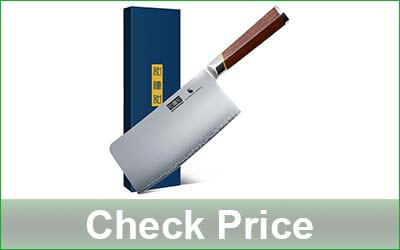
My cleaver arrived on time in a well-presented gift box that looked premium and undamaged. Unboxing was straightforward, and inside I found only the knife. Everything looked spotless, with the blade and handle showing excellent fit and finish.
Blade Quality & Craftsmanship: The 7-inch forged blade uses Japanese 10Cr15CoMoV high-carbon steel with a mirror-polished finish. Hardened to HRC 62 through high-temperature quenching, it features a 15° double-bevel edge and arrived razor sharp, fully ready for use.
Real-World Performance Testing: I have used this cleaver regularly for a couple of months. It handled large cuts of steak with smooth slicing strokes and broke down chicken using controlled chopping motions. Thick root vegetables and hard squash were easy to chop with the blade’s forward weight. For herbs, I used a rocking motion that produced fine cuts. It also diced onions cleanly and sliced garlic without crushing, leaving ingredients neat and consistent.
Edge Retention: After months of regular use, the edge stayed sharp and only recently entered my sharpening rotation.
Handle & Ergonomics: The red sandalwood handle uses a full-tang design and feels solid throughout. Its ergonomic shape follows the natural curve of my palm, providing a secure grip during long prep sessions. The craftsmanship is clean, with smooth transitions between handle and steel. Combined with the blade’s balanced weight distribution, it feels comfortable and controlled while cutting.
The Storage: No sheath is included. I stored the knife in its sturdy presentation box, where it fit securely and kept the edge protected from accidental contact.
Maintenance & Care Routine: I hand wash the cleaver with warm soapy water and dry it immediately with a towel. I never place it in a dishwasher. For sharpening, I use a 1000-3000 grit whetstone at a 15-degree angle and maintain the edge with a ceramic honing rod. I store it in the box and avoid cutting on hard surfaces.
Pros
- Razor-sharp out of the box
- Excellent long-term edge retention
- Premium Japanese steel construction
- Comfortable ergonomic wood handle
- Full-tang durable build quality
- Well-balanced heavy cutting feel
- Mirror finish reduces sticking
- Attractive gift-ready presentation box
- Versatile for meat and vegetables
Cons
- No sheath included
- Requires hand washing only
- Needs prompt drying after cleaning
- Very sharp for beginners
- Storage box less practical daily
6. KYOKU Samurai Series 7-Inch High Carbon Stainless Steel Japanese Cleaver Knife
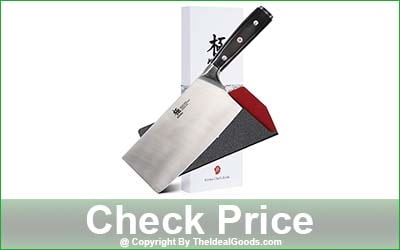
The knife is specially made to ensure maximum permanence in heavy chopping and slicing. The blade measures 7″ and is constructed from Japanese high carbon stainless steel. The blade is ice-tempered with added cobalt for superior strength, sharpness, and corrosion resistance.
Also, it is hand polished and sharpened to an edge angle between 13 and 15 degrees by most skilled artisans. The blade is manufactured as a medium-duty cleaver suitable for various cutting chores, including boneless meats, fish, vegetables, and fruit.
The handle is ergonomically designed to provide adequate grip, ease of use, and comfort. The Pakkawood handle is reinforced by triple-riveted for durability and strength. The meticulously crafted handle can easily withstand cold, heat, and moisture.
Moreover, the well-balanced handle is designed with a full tang to increase the leverage which supports relieving fatigue as well as finger pain from long time chopping or slicing.
The Japanese cleaver chef knife has a lifetime warranty and KYOKU offers free return or exchange if the product has any manufacturing defects. The cleaver knife also comes in an aesthetically fabricated box with a safety sheath.
Refrain from cutting hard materials such as metal or bone; both the blade and the handle need to be carefully cleaned by hand washing after each use and dry promptly with a cloth.
Pros
- Cryogenically treated Japanese high carbon stainless steel cutting core
- The 3-step Honbazuke method of craftsmanship provides an extremely sharp cutting edge
- The blade is created for superb edge retention and easy re-sharpening
- Ergonomically designed full tang handle for maximum grip, durability, and maneuverability
- Shining bolster and end cap adds a distinctive look and counterweight
- Beautiful cleaver knife with an elegant mosaic pin
- Gift boxed with a flocked lined sheath for added safety and elegance
- Limited lifetime warranty
- Best budget Japanese cleaver knife
Cons
- It is not dishwasher safe
- Good quality Japanese cleaver but not suitable for chopping bones
7. DALSTRONG Shogun Series X 7-Inch AUS-10V Damascus Steel Japanese Cleaver Chef Knife
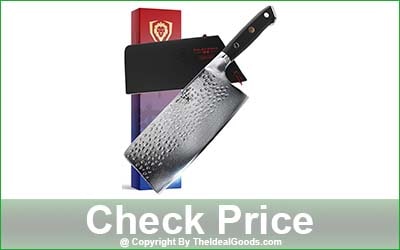
Blade: Dalstrong is one of my top picks in the cutlery industry, and their 7-inch Asian style cleaver exemplifies why. Crafted with a core of premium AUS-10V steel and clad with 33 layers of high-carbon stainless steel on each side, it boasts a total of 67 layers of stunning Damascus steel blade.
Over two months of testing, I used this razor-sharp cleaver for slicing vegetables, fruits, meats, chicken, and boneless pork. Its thin yet sturdy blade, combined with a perfectly balanced heft, exceeded my expectations in performance.
Tasks like dicing, chopping, mincing, smashing, and slicing felt effortless, making fast meal prep a breeze. The hammered finish prevents food from sticking, and the wide blade design makes transferring ingredients from the cutting board to the stove incredibly convenient.
Handle: The cleaver features a meticulously crafted G-10 handle with a full tang for outstanding durability, reinforced by triple rivets for added strength. Using this cleaver was a true pleasure for me, as its remarkable balance made it feel like an extension of my arm, enhancing both precision and control.
The ergonomic design reduces wrist fatigue during prolonged use, while its ideal heft delivers powerful and precise cuts – whether swiftly chopping ingredients or skillfully dissecting a chicken.
Others: The cleaver arrived in perfect condition, neatly packed, and an elegant embossed sheath was also included. To preserve its quality, I highly recommend hand washing and drying right away with a towel or paper after each use, then storing it securely in the sheath.
Pros
- Straight edge ensures consistent cuts
- Keep its edge pretty well & easier to sharpen
- Handle is suitable for all hand sizes
- Designed for user-friendly & pinch grip handling
- Versatile enough for your everyday needs
- Money back guarantee & lifetime warranty
- Great cleaver, absolutely worth every penny
- Top rated Japanese cleaver knife
Cons
- Higher price range
8. TURWHO 7-Inch VG-10 Damascus Steel Japanese Vegetable Cleaver Knife
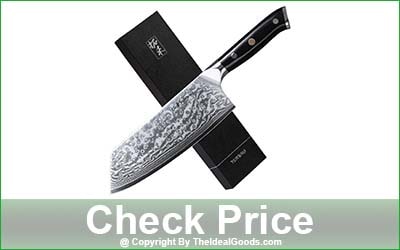
The 7.5 Inch full tang blade is made from Japanese VG-10 67-layer Damascus steel. It is treated with 60 HRC vacuum heat and liquid nitrogen cooled. The full length of the knife is 12.6 inches.
The cutting core is 60+ Rockwell hardness. The blade cutting edge is 16-18 degrees with a double edge bevel for superior sharpness. The raindrop pattern on the blade adds a touch of elegance.
The Ultra-premium G-10 full tang handle is constructed of military-grade material for exceptional durability. The ergonomically tapered design allows for grip, balance, and ease of use. The perfectly balanced weight and size allow for long-term use without irritation or soreness.
This Japanese chopping knife has a large, broad face that is designed to mince meat, cut through tough vegetables and fruit quickly and easily.
Hand-wash the knife with mild soap and water. Dry thoroughly with a soft towel or cloth. Do not submerge in water or place in dishwasher. Store the knife in the sheath and box provided.
The knife comes with a storage box and a quality plastic sheath for storage after use.
Pros
- This knife is a great value for the money
- Compared with similar products, it has outstanding performance
- Food does not stick to the blade
- Very nice feel to the handle
- Aesthetically designed
- Best rated Japanese cleaver knife
Cons
- Hand wash only
- The knife is not immersible in water
- Not for use with boned meat
9. Shun Classic 7-Inch VG-Max Damascus Steel Japanese Cleaver Vegetable Knife
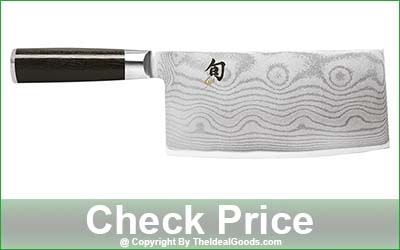
The 7-inch square blade is constructed from VG-MAX Damascus-clad steel. The cutting core of the blade is an improvement over the VG-10 model. The metal is a combination of cobalt, chromium, carbon, and tungsten. The blade is heat-treated and then cooled, which changes the microstructure of the blade to give it a finer grain and ultra-sharpness at 60-62 HRC The long-lasting edge and thinner blade make it an ideal choice for even the most seasoned chef.
The stainless steel Damascus cladding has 34 layers on each side of the blade. The blade is honed to a 16-degree angle, giving it extra sharpness. It is corrosion-resistant, keeping the elegant look for many years.
The full tang handle is made of ebony Pakkawood infused with resin for water resiliency and durability. The D-shape and ridged edge provide a firm grip when holding the knife.
The knife is designed for chopping or slicing vegetables and fruit.
This Japanese vegetable cleaver comes in a box, but there is no sheath for storage. There is a cardboard cover over the knife instead.
Pros
- Best Japanese vegetable cleaver
- The knife comes with a lifetime warranty
- Easy to clean
- Lightweight and easy to use
- Will not slip if hands are wet or greasy
Cons
- The knife is asymmetrical. Must order the correct knife for either left or right hand
- Requires weekly honing with special honing steel purchased separately
- No adequate storage provided
- Not dishwasher safe
10. KYOKU Daimyo Series 7-Inch VG-10 Damascus Steel Japanese Vegetable Cleaver Knife
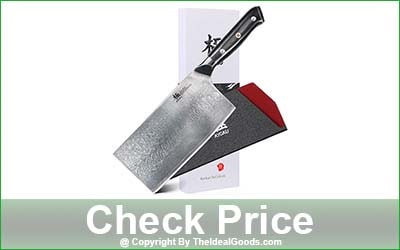
The 7-inch Japanese VG-10 Damascus blade is ultra-sharp, corrosion-resistant, and durable. The ice-tempered blade is made with 34 layers per side of stainless Damascus steel, giving it hardness and ease of use. The blade is polished to 8 -12 degrees with a double-sided edge. The HRC of 58-60 adds exceptional durability.
The traditional Japanese cleaver is hand-crafted using the three-step Honbazuke method. This gives it ultra thin sharpness and edge retention.
The knife is a medium-duty cleaver knife suitable for fish, boneless meats, vegetables, fruits, and leafy greens.
The herringbone pattern on the base of the tang prevents food from sticking to the blade. Hand wash the knife between uses and dry thoroughly. Store in sheath case.
The G10 handle has engraved riveting and a mosaic pin for added visual appeal. It is full tang constructed, and the blade extends the full length of the handle to provide a comfortable grip and a balanced performance. It includes a safety guard.
The knife comes with a sheath case for storage and safety.
Pros
- It comes with a lifetime warranty
- Free exchange or return if defective
- The bolster design is highly ergonomic
- Gift boxed
Cons
- The edge does not last after repeated use.
- Recommends using sandpaper after cleaning that could cause blade damage
- A bit too heavy for a medium-duty cleaver
FAQs About the Best Japanese Cleaver Knife
Question: What should I look for when buying the Japanese cleaver knife?
Answer: Look for Japanese high-carbon steel, traditional craftsmanship, a full tang, ergonomic Wa-handle, double or single bevel edge, and authentic branding with lifelong warranty support like SHUN, DALSTRONG or KYOKU.
Question: What is a Japanese cleaver used for?
Answer: Japanese cleavers are designed for precise chopping, slicing, and dicing of vegetables or meats, offering thick, straight cuts without a rocking motion. Their flat blade also doubles as a spatula for easy food transfer during cooking.
Question: What makes a Japanese cleaver better than a regular cleaver knife?
Answer: Japanese cleavers feature thinner, lighter blades, harder steel, sharper edges, and greater control for precision cutting – especially vegetables and thick cuts of boneless meat, unlike heavier Western cleavers designed for splitting meat or cutting bone.
Question: How can I determine if a cleaver knife is truly Japanese or fake?
Answer: Check for authentic kanji engravings, Japanese steel type, region of origin, traditional handle style, brand reputation, and product registration. Avoid suspiciously low prices and verify seller authenticity for genuine Japanese craftsmanship.
Question: Which brands offer authentic, high-quality Japanese cleaver knives?
Answer: Trusted brands include Yoshihiro, Shun, Dalstrong, Kyoku, TURWHO, Tojiro, and Global. These companies maintain traditional Japanese forging techniques, use premium steels, and are renowned globally for authentic, handcrafted cleaver knives.
Question: What’s the ideal blade length for a Japanese cleaver knife?
Answer: The ideal blade length for a Japanese cleaver is 6.5 to 7 inches. It provides optimal balance, control, and surface area for slicing, chopping, and push-cutting through vegetables with minimal effort.
Question: How to store Japanese cleaver knife?
Answer: Store it in a wooden sheath (saya), on a magnetic strip, or in a knife block to protect the edge. For drawer storage, use a thick-fiber sheath, and apply oil if storing long-term.
Question: How to care for Japanese cleaver knives?
Answer: Hand wash immediately after use, dry thoroughly, oil carbon steel blades to prevent rust, store safely, avoid dishwashers, use only soft cutting boards, and sharpen with high-quality or recommended whetstones to maintain the edge.
Question: What should you not cut with a Japanese cleaver knife?
Answer: Avoid cutting bones, frozen foods, or hard items. Japanese cleavers, are designed for vegetables or boneless meat and misuse can lead to chipping or damage due to their hard, thin blades.
Question: How to sharpen a Japanese cleaver knife?
Answer: Use a high-quality or recommended Japanese whetstone with appropriate grit, maintain a consistent 15-degree angle, sharpen slowly and evenly, and finish with a leather strop or polishing stone to restore razor-sharp edge and longevity.
Question: How long do Japanese cleaver knives last?
Answer: With proper care, Japanese cleaver knives can last decades. Regular honing, careful use, proper storage, and occasional sharpening preserve the blade, making it a lifelong tool in any serious kitchen.