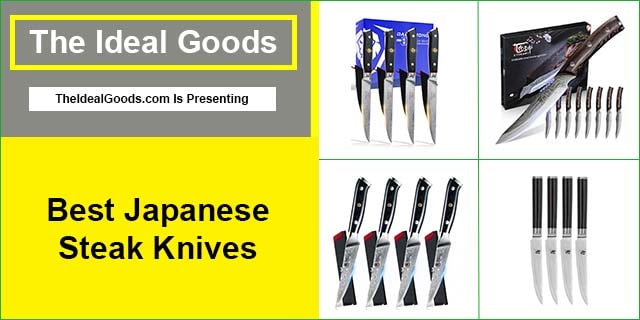
Despite being a kitchen knife expert, finding a set crafted from genuine Japanese steel has not been easy for me. In my experience, roughly 70-80% of Japanese steak knife sets on the market use imitation or Chinese steel, making it challenging to find truly authentic quality.
For this list, I researched around 35 sets and personally tested 14 steak knives made in japan. I included only the sets made from genuine Japanese steel that delivered the strongest performance in my testing.
When choosing the best Japanese steak knife set, I focused on the following criteria:
- Trusted brands known for authentic Japanese knives.
- Backed by lifetime warranties and excellent customer service.
- Blades made from premium, genuine Japanese steel.
- Razor-sharp edges cut smoothly and effortlessly.
- Full-tang handles offer balance and flawless finish.
- Comfortable to hold, simple to use and maintain.
Best Japanese Steak Knives – Top List
| Product Name | Best For |
|---|---|
| 1. DALSTRONG 4-Pc 5″ Non-Serrated Japanese Steak Knives | Premium-Quality |
| 2. SHUN 4-Pc 4.75″ Non-Serrated Japanese Steak Knife Set | Ultra-Premium |
| 3. HOSHANHO 6-Pc 4.5″ Japanese Serrated Steak Knife Set | High-Quality |
| 4. SYOKAMI 8-Pc 5″ Non-Serrated Japanese Steak Knives | Best-Selling |
| 5. KYOKU 4-Pc 4.8″ Non-Serrated Japanese Steak Knife Set | All-Purpose |
| 6. IMARKU 6-Pc 5″ Serrated Japanese Steak Knives | Most-Affordable |
| 7. HUUSK 6-Pc 4.5″ Japanese Stainless Steel Steak Knives Set | Dishwasher Safe |
Best Japanese Steak Knives
1. DALSTRONG 4-Piece 5″ AUS-10V 67-Layer Damascus Steel Non-Serrated Japanese Steak Knife Set
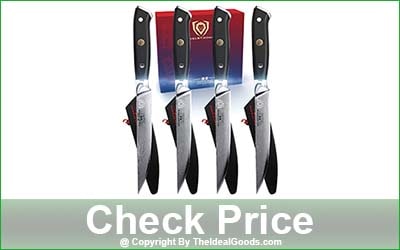
When I received these knives, I was amazed by the luxurious packaging – a magnetic box with foam padding, individual sheaths, a polishing cloth, an instruction manual, and even a branded keychain. The gift box is stunning, making it perfect for gifting. Don’t let the price intimidate you, this is a lifetime investment worth every penny!
Blade: These 5-inch steak knives are precision-forged from Japanese AUS-10V super Damascus steel with 67 layers. Japanese HC blade holds its edge longer and the Damascus layering adds strength and sharpness retention.
Out of the box, these Japanese steak knives came nearly scalpel-sharp. Cutting steaks feels like using a hot knife through butter, preserving the meat’s juices perfectly. From rib eyes and roasts to trimming fat, chopping veggies, and small fruits, and even as a utility knife, these are incredibly versatile.
I’ve been using these knives for over two years, 2-3 times a week, and they’re still as sharp as the day I got them. I haven’t needed to sharpen them yet, and I must say they’ll become your go-to knives for all kinds of kitchen tasks.
Handle: The military-grade G10 handles on these knives are full tang and incredibly robust. The smooth fitting between the rivets and tang ensures an even surface, making them comfortable and cleaning effortless with no food sticking. The mirror-polished end cap and bolsters add a touch of elegance while providing excellent durability and balance.
The textured surface and curved design provide a secure, non-slip grip, even when my hands are wet or oily. The ergonomic handle feels so natural, it’s like an extension of my hand, making every cut effortless and precise. Holding these knives with my larger hand feels a tiny bit short, but I can forgive that because of their impressive weight and beautiful craftsmanship.
Maintenance: Since these are Damascus blades, they require special care to stay in perfect condition. Always hand wash them gently and immediately dry with a soft towel. Never use a dishwasher!
Pros
- Japanese steel retains sharp edges
- Cuts meat effortlessly, like butter
- Versatile for various cutting tasks
- Grippy handles with a sturdy build
- Perfect balance and comfortable heft
- Individual sheaths for each knife
- I expect they will last a lifetime with care
- Risk-free guarantee and lifetime warranty
Cons
- The price tag is a bit high
- Handles feel small for larger hands
2. SHUN 4-Piece 4.75″ VG-MAX 69-Layer Damascus Steel Non-Serrated Japanese Steak Knives
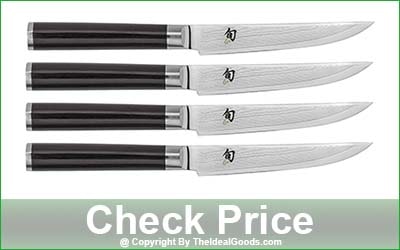
The knives arrived in an elegant black box, perfect for wedding gifting and protective storage, featuring custom foam padding to secure the knives during shipping. However, they do not include any sheath.
Blade: The 4.75″ blades, handcrafted with a Japanese VG-MAX core and 69 layers of Damascus cladding, came scary-sharp right out of the box. Cutting through steak, poultry, or ribeye feels like slicing butter, preserving juices for a more flavorful bite instead of spilling onto my plate.
Damascus cladding and heat treatment ensure incredible long-lasting edge retention. Since getting this set in November 2021, I’ve used them extensively without needing to sharpen them, as they hold their edge impressively well. When required, sharpening on a whetstone is quick and effortless.
However, while the steel’s sharpness is remarkable, it’s also brittle; the points can chip if not handled carefully. Also, I would not recommend using these knives for vegetables, fruits, or other general kitchen tasks.
Handle: The D-shaped Pakkawood handles are attractive with a traditional Japanese-style design, providing a secure and comfortable grip for both hands. They are moisture-resistant, durable, and easy to maintain.
Their subtle wooden finish adds a premium feel, and the knives are well-balanced and lightweight for extended use. While I appreciate their quality, I wish the handles were slightly more ergonomic for an even better hold.
Maintenance: These Japanese steak knives require proper care to preserve their quality and sharpness. Always hand wash them, dry immediately with a soft cloth to prevent rust, and avoid leaving the handles soaking in water or using a dishwasher.
Pros
- Blades hold the edge much longer
- Full tang handles for great control
- Waterproof handles resist bacteria buildup
- Handcrafted Japanese masterpiece
- They’d last a lifetime with proper care
- Free sharpening and honing support
- Lifetime warranty against defects
- Expensive but worth every penny
Cons
- Higher price range
- Handles may feel small for big hands
3. HOSHANHO 6-Piece 4.5-Inch 10Cr15CoMoV High-Carbon Stainless Steel Serrated Japanese Steak Knife Set
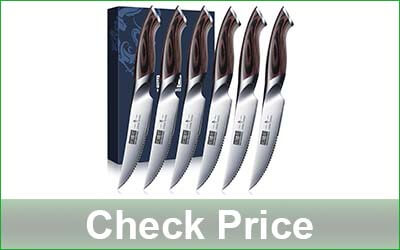
I received the set a day earlier than expected. It arrived in a sturdy wooden box with fitted slots, giving the six knives a polished, gift-ready presentation. Each blade had its own protective sleeve, and all six arrived flawless, without scratches or dents.
Blade Quality & Craftsmanship: The 4.5-inch blades use Japanese 10Cr15CoMoV high-carbon stainless steel. They are forged, heat-treated, and ice-tempered to 60 HRC, with a frosted finish and sharp 15-degree half-serrated edge. Every knife arrived razor sharp.
Real-World Performance Testing: I started with ribeye steaks, using a gentle sawing motion. The blade moved cleanly through the meat without tearing the crust. Grilled lamb chops were next, and the serrated edge bit into the meat around the bone cleanly.
I then tested the knives on turkey breast, cutting even strips with almost no downward pressure. While slicing spiral ham, the blade followed straight lines through the meat and glaze without snagging. I was impressed by how controlled each cut felt.
For vegetables, I sliced a rutabaga into cubes using steady strokes. The pointed tip pierced the tough skin in one pass. I also tested the knife on tomato skin, where the sharp edge produced clean, precise cuts. The blade weight added useful momentum throughout these tasks.
Edge Retention: After eight weeks of regular use, three times a week, the edge still bites cleanly into meat without requiring honing. Based on this performance, I expect the sharpness to hold up well with frequent use over the next few years.
Handle & Ergonomics: The dark brown Pakkawood handle has an ergonomic shape and full-tang construction. I found no gaps or rough edges at the joints, and the wood grain was smoothly sanded around every seam. With my large hands, the handle feels substantial and sturdy rather than thin.
The balance leans slightly toward the blade, which helped reduce wrist effort when cutting meat. The thicker profile gave me a secure grip and good control during longer sessions. Even with oily fingers, the smooth handle never felt slippery or unstable.
Storage: There is no separate sheath, but the wooden block keeps all six knives upright with the blades separated. I found this convenient for keeping the Japanese steak knife set organized and safely stored in a drawer.
Maintenance & Care Routine: I hand-wash each knife, rinse it promptly, and dry it completely before storage. I avoid the dishwasher, prolonged moisture, and hard cutting surfaces. When sharpening becomes necessary, I use a whetstone while maintaining the original 15-degree edge.
Pros
- Blades arrive sharp out of the box
- Attractive frosted blade finish
- Excellent meat-cutting performance
- Edge holds up after months
- Beautiful Pakkawood handle
- Handle stays comfortable during long use
- Full tang adds durability and balance
- Sturdy wooden block for storage
- Gift-ready wooden presentation
- Good value for the price
Cons
- Requires hand washing only always
- Wet storage can cause rust
- Frosted finish shows water spots
- Blade feels heavy to some
4. SYOKAMI 8-Piece 5″ High-Carbon Stainless Steel Non-Serrated Japanese Steak Knife Set
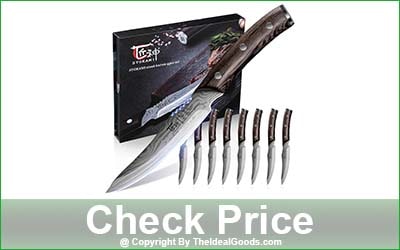
When I got them, the knives were neatly packaged in a sturdy box that felt so luxurious. The box featured a foam-lined interior that kept the knives securely in place, along with plastic caps to safeguard the knife tips from any damage.
Blade: The 4.8″ blades are made from high-carbon Japanese stainless steel with a laser-engraved Damascus finish that looks stunning. They arrived extremely sharp and effortlessly sliced through my thick ribeye and other meats, feeling like cutting butter!
The non-serrated blades are versatile, making slicing, peeling, and chopping vegetables, fruits, and more a breeze. Whether it’s tomatoes, onions, potatoes, carrots or lemons, these knives consistently delivered excellent performance.
I’ve used them daily for over three months, intentionally putting them to the test, and they retained their sharpness impressively well. Even as the edge slightly dulled over time, the Japanese steel and plain edge made sharpening easy.
Handle: The Japanese steak knives feature eye-catching handles made of beautifully designed Wenge wood with triple-rivet fittings, seamlessly joining the wood and steel without any flaws. The full-tang handles feel solid, weighty, and well-balanced, providing comfort and ease of use.
While the lack of texture can make them slippery in wet or oily hands, the ergonomic blade design includes non-aggressive teeth on the spine, offering better control for delicate or heavier cutting tasks, making everything from slicing steaks to intricate cuts much easier.
Maintenance: These knives require hand washing with water and towel drying after each use. No dishwasher! Regular maintenance, especially for the high-carbon steel blades, keeps them in great condition.
Pros
- Slices cooked meats like butter
- Cuts various ingredients with ease
- Warm, natural-feeling wood handles
- Large handles fit my XL hand perfectly
- Well-weighted and simple to handle
- 8-Pc high-quality knives at a great price
- Unique design with an attractive look
- Perfect gift for loved ones
- Lifetime warranty and refund policy
Cons
- This is not a true Damascus steel knife
5. KYOKU 4-Piece 4.8″ VG10 67-Layer Damascus Steel Non-Serrated Japanese Steak Knives
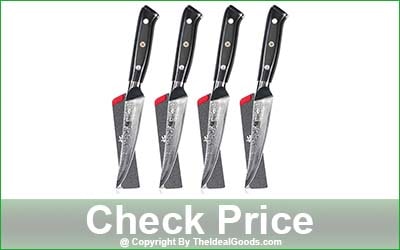
These knives shipped impressively fast and arrived beautifully packaged in a velour box inside a white cardboard box, complete with individual blade sheaths and plastic wrapping for each knife.
Blade: The 4.5″ blades are made with a cryogenically treated Japanese VG-10 steel core, encased in Damascus steel folded 33 times, resulting in a total of 67 layers. Right out of the box, they’re razor-sharp and have a good weight.
I’ve tried them on steak, pork chops, chicken breast, and even trimming chuck meat – the Japanese steak knives perform flawlessly every time. The precision of the non-serrated edge with which they cut through juicy meats and even vegetables is remarkable, preserving the food’s texture and taste. After three months of extensive testing – cutting, trimming, and peeling vegetables, fruits, and meats – the blades have retained their sharp edge exceptionally well.
Handle: The G10 full-tang, triple-riveted handles are impeccably crafted, well-balanced, and ergonomic. They feel sturdy, solid, and fit comfortably in my larger hands, providing an easy hold. The three silver rivets and the thoughtfully curved design enhance grip to prevent slipping, ensuring optimal control and precision. Overall, the handle’s size, weight, and balance make it feel like a natural extension of my hand.
Maintenance: After use, I always hand wash these knives and dry them immediately with a soft towel or paper towel. While rust-resistant, they’re not rust-proof, and never wash in the dishwasher.
Pros
- They slice steak very cleanly
- Versatile for various kitchen tasks
- Heat-treated holds sharpness well
- Excellent weight and balance
- Perfectly fits almost all sizes of hands
- Pricey but worth the investment
- Includes sheaths for safe storage
- Backed by a lifetime warranty
Cons
- The sheath feels flimsy
6. IMARKU 6-Piece 5″ High-Carbon 5cr15mov Stainless Steel Serrated Japanese Steak Knife Set
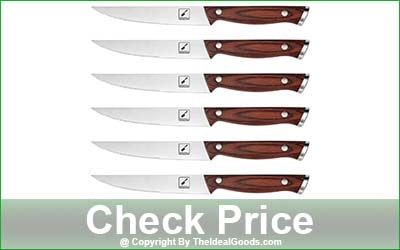
My IMARKU set arrived two days early in a sturdy outer carton that was clean and free of dents. Inside was an elegant reddish gift box holding six knives, each blade gleaming and securely protected by a fitted foam insert.
Blade Quality & Craftsmanship: Each 5-inch blade is forged from 5CR15MOV high-carbon stainless steel, heat-treated and ice-tempered to HRC 55±2. The polished silver finish and micro-serrated edges arrived sharp. Straight out of the box, they sliced through paper cleanly.
Real-World Performance Testing: I used these knives nightly for more than six weeks. I started with a grilled ribeye, where the serrations cut through the crust and center without dragging or tearing the meat fibers. Pork chops sliced cleanly down to the bone with a gentle back-and-forth motion and no sticking.
Roasted chicken thighs separated smoothly, and I was surprised by how easily the blades glided past the joints without crushing the meat. With lamb chops, I needed only light pressure, as the teeth caught the crust and pulled through in one pass.
For tomatoes, I used a slow draw cut through the skin without crushing the flesh underneath. The micro-serrated edge also performed well when cutting fruit and pizza, while a controlled sawing motion handled tougher vegetables with ease.
Edge Retention: After regular use for more than two years, the serrated edges remain sharp and still bite into meat like they did on the first day. I have maintained them with proper hand washing and immediate drying.
Handle & Ergonomics: The Pakkawood handle features a full tang secured with two rivets, giving each knife a solid, balanced feel. The profile fits comfortably in my large hand, while the polished finish reflects careful craftsmanship. Even with wet or oily fingers from handling meat, the handle remained grippy and never felt slick or unstable.
Maintenance & Care Routine: I hand wash each knife after use, dry it immediately with a soft cloth, and store it in the gift box. I avoid the dishwasher and harsh scrubbers. For serrated edges, I recommend using a professional sharpener with specialized files.
Pros
- Sharp micro-serrated cutting edges
- Strong performance on thick meats
- Useful for various foods and vegetables
- Excellent edge retention
- Comfortable Pakkawood handles
- Balanced weight reduces cutting effort
- Durable full-tang construction
- Attractive premium gift box
- Six Japanese steak knives at fair price
Cons
- Serrated edges are difficult to sharpen
- Handle feels large for some hands
- Some users prefer lighter knives
- Hand washing is only required
7. HUUSK 6-Piece 4.5-Inch Japanese Stainless Steel Serrated Steak Knives Set
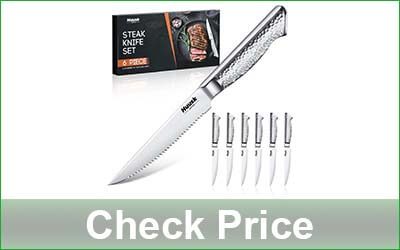
Shipping took longer than expected, but the wait paid off. Huusk steak knives arrived in a gift-ready box with a clean, elegant presentation. Each knife had a plastic tip cover, and the polished finish looked attractive during unboxing.
Blade Quality & Craftsmanship: The 4.5-inch blades are forged from a single piece of Japanese stainless steel with a serrated edge and polished finish. Straight out of the box, every knife delivered an aggressive bite and was ready for immediate table use.
Real-World Performance Testing: Over eight weeks, I used this set almost every night at dinner. With a thick ribeye, the deep serration gripped the crust while a slow sawing motion separated the tender meat cleanly. When testing pork chops, I used the same controlled sawing motion rather than downward pressure, and the serrated blade tracked evenly through the bone-in edge.
A leaner sirloin steak provided the toughest test. When I rushed the stroke, the blade caused some tearing, but slowing down produced cleaner cuts. For a smaller task, I sliced dinner rolls at the table, and the serration handled the soft bread without crushing it.
Edge Retention: After two months of regular use, the serrated edge still delivers a strong bite and cuts cleanly without noticeable dulling.
Handle & Ergonomics: The all-metal stainless steel handle forms one seamless piece with the blade, with no gaps or separate tang assembly. Its curved profile felt secure in my hand, while the textured surface maintained grip when my fingers were wet or oily.
At about eleven inches overall, the knives fit my medium to large hands comfortably. From my experience, the balance and comfort were excellent, although I found the handle slightly bulky.
The Storage: There is no dedicated knife block or sheath included, only the plastic tip covers used for shipping. I store my Japanese steak knife set in a drawer organizer for protection.
Maintenance & Care Routine: During testing, I put the knives through 17+ dishwasher cycles and found no rust, rapid dulling, or discoloration. However, Japanese steels can be delicate, and some customers report rust spots after dishwasher use.
For that reason, I recommend hand washing each knife after dinner and drying it immediately with a towel to prevent water spots and extend its life. For sharpening, I use a ceramic rod designed for serrated edges.
Pros
- Exceptionally sharp straight out of box
- Cuts smoothly with proper sawing technique
- Ergonomic curved & textured handle design
- Balanced one-piece forged construction
- Non-slip grip even with wet hands
- Dishwasher safe for quick cleanup
- Blade overhang protects cutting edge
- Great value for a set of six
- Gift-ready presentation box included
Cons
- Deep serration can tear meat
- Requires controlled sawing technique
- Rust spots reported after dishwasher use
- Handle feels bulky to some
- Sharpening needs specialized serrated tools
FAQs About the Best Japanese Steak Knives
Question: Should Japanese steak knives be serrated or straight-edged?
Answer: Straight edges provide cleaner, more precise cuts, while serrated blades require less sharpening and perform well when cutting through steaks with tougher surfaces.
Question: What steel is best for Japanese steak knives?
Answer: VG-10, AUS-10, and other high-quality Japanese steels offer excellent sharpness, edge retention, corrosion resistance, and durability for everyday steak cutting.
Question: Are Japanese steak knives good for cutting tough steaks?
Answer: Yes, a quality Japanese steak knife handles tough steaks well because its sharp, durable edge cuts through meat cleanly without requiring excessive pressure.
Question: What should you not cut with a Japanese steak knife?
Answer: Avoid cutting bones, frozen foods, hard vegetables, canned items, or using Japanese steak knives on hard surfaces. These can damage the blade and reduce its sharpness and longevity.
Question: Are Japanese steak knives suitable for cutting raw vegetables?
Answer: Japanese steak knives can cut soft raw vegetables but are not ideal for hard or dense ones. For optimal results, use a specialized vegetable knife like a nakiri or santoku.
Question: Can Japanese steak knives cut other foods?
Answer: Yes, I use them for chicken, pork, cooked vegetables, and other soft foods. However, I avoid hard bones and frozen ingredients that can damage their edges.
Question: How to care for a Japanese steak knife?
Answer: Handwash with mild soap, dry immediately with a soft cloth, store safely in a knife block or sheath, and avoid cutting hard items or using abrasive surfaces to maintain your Japanese steak knife’s sharpness and longevity.
Question: How to sharpen Japanese steak knives?
Answer: Sharpen Japanese steak knives using a fine-grit whetstone at the correct angle, typically 10-15 degrees. Avoid electric sharpeners and honing rods, as they can damage the blade’s delicate edge.
Question: What sharpener should I use for Japanese steak knives?
Answer: Use a whetstone with fine grit to sharpen Japanese steak knives, as it preserves the blade’s sharpness and delicate edge. Avoid electric/metal sharpeners or honing rods, which may damage the blade.
Question: How often should Japanese steak knives be sharpened?
Answer: Sharpening frequency depends on usage and steel hardness. With regular home use, proper honing and occasional sharpening typically keep the edge performing well.
Question: Are Japanese steak knives difficult to maintain?
Answer: Most Japanese steak knives are easy to maintain. Hand washing, immediate drying, proper storage, and occasional sharpening help preserve their edge and appearance.
Question: How should I store Japanese steak knives?
Answer: I recommend storing Japanese steak knives in a knife block, sheath, or magnetic holder that protects the edge and prevents the blade from contacting other utensils.
Question: Are Japanese steak knives worth the higher price?
Answer: I consider them worthwhile when sharpness, cutting control, craftsmanship, and long-term performance matter. A quality Japanese knife can provide noticeably better cutting performance.