Choosing the right sushi knife can make preparing sashimi cleaner, smoother, and more enjoyable. I tested several top rated Yoshihiro knives to see how they perform with raw fish, focusing on sharpness, slicing control, edge retention, handle comfort, and craftsmanship. In this review, I’ll share my hands-on experience to help you find the best option for your kitchen.
Best Yoshihiro Sushi Knife – Top List
Best Yoshihiro Sushi Knife
1. YOSHIHIRO Shiroko 11.8-Inch High Carbon White Steel Kasumi Yanagi Sushi Sashimi Chef Knife
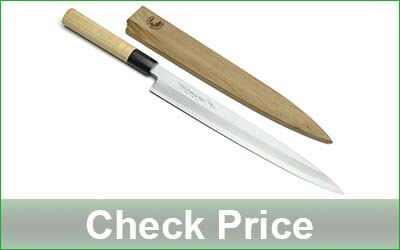
I received the Yoshihiro knife just two days after ordering. It arrived securely wrapped in a sturdy box in good condition, with the knife and wooden saya safely inside the package. Everything looked pristine, well finished, and ready to use.
Blade Quality & Craftsmanship: The 11.8-inch blade is traditionally hand-forged from premium Japanese high-carbon White Steel #2, featuring a traditional Kasumi finish, hardened to 62-63 HRC, with a single-beveled edge. It arrived razor sharp and ready for immediate slicing.
Real-World Performance Testing: I have been testing this knife for over nine weeks. I started with sliced salmon and experienced an “aha” moment. It produced paper-thin salmon slices with a single smooth pulling stroke, without sawing back and forth.
The blade is masterfully crafted and honed. Tuna cut just like butter with minimal effort, while long pulling strokes produced smooth cuts as the blade glided through without tearing the flesh. It sliced sashimi and cut rolls like nobody’s business. A solid performer.
Yellowtail proved easy too, with thin cuts staying intact and unbruised. I also tried it on boneless chicken breast, using light pressure and a slicing motion, and it cut through easily, though this isn’t the blade’s intended purpose. Preparing food is much more pleasurable when you have excellent tools.
Edge Retention: After two months of regular use, the edge remained impressively sharp, needing only light honing on my whetstone.
Handle & Ergonomics: The magnolia wood handle has a traditional D-shaped Wa design with careful handcrafted finishing. Its lightweight build kept the knife comfortable during long slicing sessions without feeling front-heavy or awkward. The balance between blade and handle felt natural in my hand, giving me steady control through every pull stroke.
The finish feels smooth, with no rough edges or splinters anywhere along the grip. My hand settled into the shape quickly, and the surface never became slick, even with wet fingers during extended cutting or repeated use.
The Storage: The included magnolia wood saya accepts the knife smoothly, holds it securely, protects the edge well, and allows airflow that helps reduce unwanted moisture buildup, adding a nice traditional touch.
Maintenance & Care Routine: I always hand wash the blade with mild soap, dry it immediately using a clean towel, and never place it in the dishwasher. I store it inside the wooden saya, avoid bones and frozen foods, sharpen it on a 6000-grit Japanese water stone at about 12 to 15 degrees, and never use standard honing steel.
Pros
- Proudly handcrafted in Japan
- Razor sharp straight from box
- Traditional craftsmanship with mist pattern
- Excellent sashimi slicing control
- Holds edge well with use
- Comfortable magnolia wood handle
- Secure wooden saya included
- Excellent value for the price
- Lifetime warranty included
Cons
- Demands consistent hand washing care
- High-carbon steel rusts easily
- Requires frequent water stone sharpening
2. YOSHIHIRO 10.5-Inch Inox Stainless Steel Japanese Yanagi Sushi Sashimi Knife
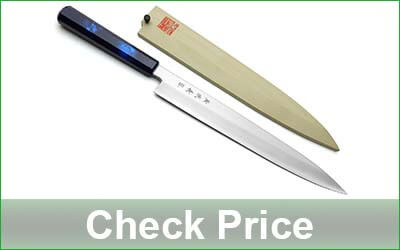
The package arrived right on schedule and in good condition. The box contained the Yanagi knife and a magnolia wood saya. Everything looked spotless, carefully polished, and shining, creating a completely premium first impression.
Blade Quality & Craftsmanship: The 10.5-inch blade is crafted from AUS-8 stainless steel, hardened to 60 HRC, and hand forged in Japan. This single-bevel edge arrived razor sharp, ready to slice immediately without any extra sharpening needed.
Real-World Performance Testing: Over several weeks, I used this knife almost daily for sashimi. When slicing salmon, I pulled the blade toward me in one long stroke, and the flesh separated cleanly, leaving glossy, even pieces without tearing.
Cutting tuna required the same motion, and the concave back kept the fish from sticking. With yellowtail, I angled the blade slightly and used a single stroke for thin, even slices. I prepared sashimi and sushi rolls with accurate, uniform cuts that looked restaurant-quality in my home kitchen.
I also sliced boneless cooked chicken and trimmed fish fillets with excellent control. I tried it on cucumber for garnish and tomato for salad, and it sliced through smoothly without crushing the vegetables. With such a premium Japanese sushi knife, every cut felt clean, and food released easily from the blade without sticking.
Edge Retention: After seven weeks of regular slicing, I enjoy sharpening, so once a month I touch up the edge. It stayed impressively sharp with only routine maintenance needed to maintain its razor-sharp performance.
Handle & Ergonomics: The handcrafted resin Wa-style handle has a traditional Japanese octagonal shape that feels light and secure. The finish felt smooth without rough spots, and the resin surface offered a solid, non-slip grip with damp or sweaty hands during extended use.
The full-tang construction added durability and stability. It felt neither too front-heavy nor too light, just right for professional use during longer slicing sessions. The overall balance between blade and handle gave me precise control while preparing sashimi.
The Storage: The included magnolia wood saya fits the blade securely and protects the edge well. It allows natural airflow, helping reduce moisture while keeping the knife safely stored.
Maintenance & Care Routine: I hand wash the knife, dry it immediately with a towel, and store it inside the saya after every use. It is not dishwasher safe. I avoid bones, frozen foods, and hard cutting surfaces. I maintain the edge with 1000 and 6000 grit water whetstones at about a 12 to 15 degree angle, then finish on a leather strop.
Pros
- Handcrafted in Japan, not mass-produced
- Arrived razor sharp and ready immediately
- Excellent sashimi slicing performance
- Concave grind reduced cutting friction
- AUS-8 steel holds its edge well
- Comfortable, lightweight resin handle
- Full tang adds excellent balance and stability
- Magnolia saya protects the blade nicely
- Professional quality for the price
- Lifetime durability with proper care
Cons
- Requires water whetstone sharpening only
- Not dishwasher safe, requires careful hand washing
- Single edge has a learning curve
- Resin handle is less durable than wood
3. YOSHIHIRO 11.8-Inch SVG-10 Semi-Stainless Steel Yanagi Japanese Sushi Sashimi Knife
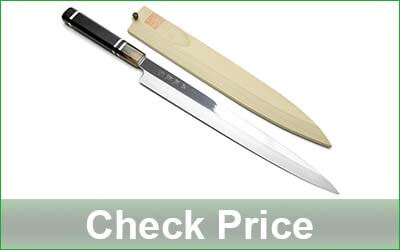
If you ask me which is my favorite from this entire best Yoshihiro sushi knife list, I would say this Yoshihiro Yanagi SVG-10 is my top choice. My high-end sushi knife arrived on time as expected, packaged securely in a sturdy box. The knife and magnolia saya were neatly packed inside, both looking flawless, and the blade was mirror polished. My first impression was simply, wow.
Blade Quality & Craftsmanship: The 11.8-inch, hand-forged premium SVG-10 semi-stainless steel blade features a mirror finish, single-bevel edge, and 62-63 HRC hardness. It arrived razor sharp with outstanding craftsmanship and was ready to use immediately.
Real-World Performance Testing: I tested this Yanagi in my kitchen for over two months, using it to prepare sushi and slice raw tuna and salmon. I sliced salmon fillets using long pull strokes along the full blade length, and the blade glided through with clean, even cuts, producing smooth, glossy slices. Tuna loin responded the same way, with the flat grind keeping each slice intact without tearing. Every sushi roll came out smooth and uniform, with no shredding or tearing, just intact slices.
Yellowtail was just as smooth, with the single edge minimizing resistance on thin cuts. I also prepared sushi-grade snapper, and the flesh remained firm with clean edges.
For sea bream, gentle draw cuts produced paper-thin slices without crushing the flesh. I also tried it on cucumber sheets for garnish, using a straight downward push, and got clean, thin rounds without sticking, while squid strips stayed smooth without rough surfaces. Every cut showed the precision that would impress any professional sushi chef, while the knife’s premium Japanese craftsmanship was clear in every detail.
Edge Retention: After eight weeks of regular sashimi preparation, the edge stayed impressively sharp, needing only occasional stropping to maintain its razor-sharp edge.
Handle & Ergonomics: The handcrafted ebony wood octagonal handle with shining triple-ring accents has a refined fit and finish, with no rough edges anywhere. Its traditional Wa-style profile provides a natural grip, and the handle balances the long blade well. It feels light yet secure in my large hand.
The grip stays secure and comfortable even when my hands get damp, and the texture offers a natural, non-slip hold without causing strain during long slicing sessions.
The Storage: The blade slides smoothly into the included magnolia wood saya and stays securely protected. It protects the edge well while allowing airflow that helps reduce moisture during storage.
Maintenance & Care Routine: I hand wash the knife with mild soap, dry it immediately using a soft towel, and store it inside the included saya. I never place it in the dishwasher or cut bones, frozen foods, or nutshells. I maintain the edge with Japanese water whetstones, using 6000 grit for routine sharpening, 1000 to 3000 grit when needed, and sharpening at about 12 to 15 degrees.
Pros
- Handcrafted in Japan, not mass-produced
- Stain-resistant, semi-stainless VG-10 steel
- Razor sharp straight from the box
- Elegant mirror finish looks outstanding
- Excellent sashimi slicing precision
- Excellent edge retention over time
- Comfortable, well-balanced ebony handle
- Secure magnolia saya included
- Highly recommended for professional sushi chefs
Cons
- Requires water stone sharpening only
- Not dishwasher safe, requires careful hand washing
- Specialized for soft fish slicing only
- High price point overall
4. YOSHIHIRO Gintsuru Ginsan 11.8-Inch Stainless Steel Yanagi Kiritsuke Japanese Sushi Sashimi Knife
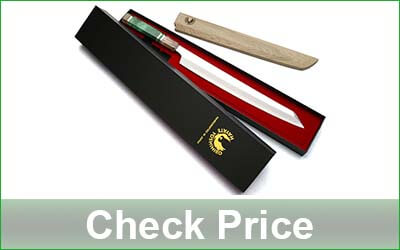
My knife arrived on time in a clean, sturdy box with the blade protected inside its magnolia saya. The knife looked flawless, mirror polished, and ready for use right after unboxing.
Blade Quality & Craftsmanship: The 11.8-inch hand-forged Ginsan stainless steel blade features a mirror-polished Hongasumi finish, single-edge, 63 to 64 HRC hardness, and arrived razor sharp for immediate slicing.
Real-World Performance Testing: Over several weeks, I sliced salmon fillets using slow pull strokes, and the blade moved through the flesh with barely any resistance, keeping each cut clean. Tuna cut into even portions without tearing. Yellowtail produced clean, glossy slices with little resistance. I also prepared boneless sea bream using full blade strokes that kept the flesh intact. For squid and skinless octopus, the sharp single edge created thin, consistent cuts while maintaining excellent presentation throughout each session.
Edge Retention: After weeks of regular slicing, the edge stayed extremely sharp and only needed light touch-ups.
Handle & Ergonomics: The stabilized maple burl handle features an octagonal profile with triple nickel silver rings and a water buffalo horn bolster. Its full tang construction gives the knife excellent balance without feeling heavy. The grip stayed secure even during extended fish preparation, while the smooth finish felt comfortable in my hand and helped maintain precise control through long slicing motions.
The Storage: The included magnolia wood saya fits the blade securely, protects the edge well, allows light ventilation, and keeps moisture from collecting during storage.
Maintenance & Care Routine: I always hand wash the knife, dry it immediately with a soft towel, and store it inside the magnolia saya. I never place it in the dishwasher or cut bones. I sharpen it using a 1000 and 6000 grit water whetstone at about a 12 to 15 degree angle, then finish with a leather strop.
Pros
- Made in Japan craftsmanship
- Outstanding long-lasting edge retention
- Razor sharp from first use
- Beautiful mirror polished finish
- Excellent balance during slicing
- Premium stabilized maple burl handle
- Secure magnolia wood saya included
- Water whetstone sharpening works well
- 30-day manufacturer defect warranty
Cons
- Hand washing always required
- Only suitable for boneless fish
- Single edge needs practice
- Premium price feels expensive
5. YOSHIHIRO 9.5-Inch VG10 16-Layer Hammered Damascus Stainless Steel Sujihiki Slicer Chefs Knife
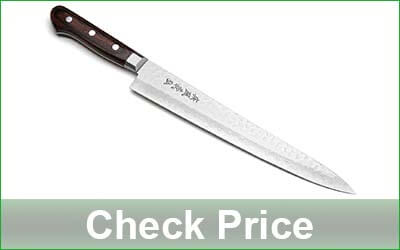
My order arrived on time in an attractive presentation box that was clean and undamaged. Inside, I found only the knife, securely protected and in flawless condition, with a striking finish that immediately stood out.
Blade Quality & Craftsmanship: The blade features a forged 16-layer hammered Damascus construction with a VG10 core, 9.5-inch length, HRC 60 hardness, and a double-edged 15-degree profile. It arrived razor sharp and ready for immediate use.
Real-World Performance Testing: I used this Sujihiki regularly for several weeks. Fresh salmon fillets sliced into clean sashimi with long pull cuts that left smooth surfaces. Smoked salmon separated into thin, even portions without tearing. Prime rib carved into uniform slices with a single stroke. Roast chicken breast stayed intact while carving. Cucumbers turned out paper-thin using steady slicing motions, and fresh herbs chopped cleanly with gentle rocking. Every cut stayed consistent and controlled throughout my testing.
Edge Retention: After weeks of regular use, the edge stayed impressively sharp and needed only light touch-ups on a water whetstone.
Handle & Ergonomics: The handcrafted mahogany handle follows a Western profile with a full tang that gives the knife excellent stability. Its size fit my hand comfortably, and the smooth finish felt refined without becoming slippery. Weight distribution stayed balanced from handle to blade, making long slicing sessions comfortable. The handle offered a secure grip while maintaining precise control during delicate cuts and larger carving jobs.
The Storage: No sheath comes with this knife, so I stored it on a magnetic knife strip to protect the edge and keep the blade dry between uses.
Maintenance & Care Routine: I always hand washed the knife and dried it immediately with a soft towel, especially after cutting acidic foods. I never placed it in the dishwasher or used it on bones, frozen foods, or hard surfaces. For maintenance, I used Japanese water whetstones around 1000 and 6000 grit at roughly a 15-degree angle per side.
Pros
- Handcrafted by skilled artisans in Japan
- Razor sharp from the box
- Excellent long-lasting edge retention
- Hammered finish reduces sticking
- Comfortable full tang handle
- Well balanced for slicing
- Lifetime-worthy premium construction
- Limited lifetime warranty
Cons
- No protective sheath included
- Hand washing required only
- Needs water stone sharpening
- Rust possible without prompt drying
6. YOSHIHIRO Aonamiuchi 11.8-Inch Blue Steel #1 Sakimaru Takobiki Japanese Sushi Sashimi Knife
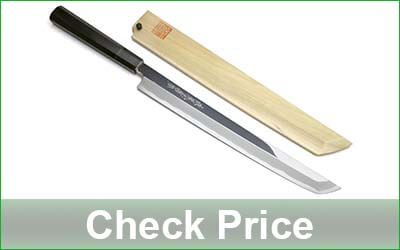
My order arrived on time in good condition. The knife and magnolia saya were securely packed inside the box. Everything looked spotless, beautifully finished, and ready for use right after unboxing.
Blade Quality & Craftsmanship: The 11.8-inch mirror-polished Blue Steel #1 carbon blade is hand forged with wave-forged construction, hardened to 63-64 HRC. Its single-edged profile arrived razor sharp and ready for precise sashimi preparation.
Real-World Performance Testing: Over several weeks I used this knife mainly for sashimi prep. Slicing salmon with a single pull stroke gave clean, glossy cuts with no tearing. Tuna sliced just as smoothly, holding its shape without dragging or bruising. Octopus tentacles were the real test, and the blunt tip handled the curves cleanly, cutting through without shredding the flesh. For other tasks, I tried thin slices of yellowtail using the same pull technique, and it produced consistent, paper thin cuts every time.
Edge Retention: After weeks of steady sashimi preparation, the edge stayed extremely sharp with only routine water stone touch-ups.
Handle & Ergonomics: The handcrafted ebony octagonal Wa-style handle feels lightweight while providing excellent balance with the long blade. Its comfortable shape naturally guides hand placement for controlled slicing. The finish is smooth without rough edges, making long preparation sessions comfortable. The handle stayed secure in my grip throughout extended fish slicing, giving me steady control for clean, consistent cuts from heel to tip.
The Storage: The included magnolia saya accepts the knife smoothly and holds it securely. It protects the edge, encourages airflow, and helps keep moisture away during storage.
Maintenance & Care Routine: I always hand washed the blade, dried it immediately with a towel, and applied a light coat of oil before storing it in the saya. I never used a dishwasher or cut bones or frozen foods. I maintained the edge with a 6000-grit water whetstone, using a 12 to 15-degree angle, and honed only with water stones.
Pros
- Handmade in Japan craftsmanship
- Exceptional razor sharp edge
- Beautiful wave forged finish
- Excellent sashimi slicing precision
- Lightweight, balanced ebony handle
- Secure magnolia saya included
- Holds edge very well
- Water stone sharpens beautifully
- Traditional single-edge performance
- High-quality lifetime investment
Cons
- Requires regular oiling care
- Not stain-resistant steel
- Hand wash only
- Unsuitable for hard ingredients
- Water stone sharpening required
7. YOSHIHIRO 9.5-Inch VG10 Steel Core with 46-Layer Hammered Damascus Sujihiki Japanese Slicer Knife
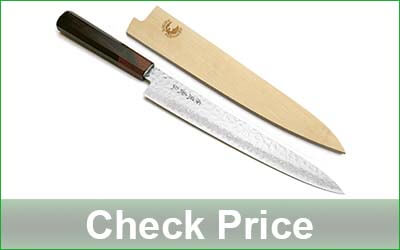
My order arrived on time in a well-presented retail box, and everything looked clean upon opening. Inside, I found the knife and a wooden saya, both spotless, carefully protected, and ready for use.
Blade Quality & Craftsmanship: The VG10 stainless steel core features 46 hammered Damascus layers with a mirror-polished finish. This 9.5-inch forged blade reaches 60 HRC, has a double-edged 12 to 15-degree edge, and arrived razor sharp.
Real-World Performance Testing: Over two months of regular use, I sliced salmon and tuna for sashimi using long pull strokes, letting the edge glide through without tearing the flesh. Carving a roasted chicken became simple, with clean single motions separating meat from bone without shredding it. Slicing cucumbers for garnish showed the blade gliding thin, even cuts with barely any pressure. For a change, I used it on a pork loin, cutting it into chops with smooth strokes that kept each piece uniform.
Edge Retention: After two months of regular slicing, the edge stayed impressively sharp with only occasional leather stropping.
Handle & Ergonomics: The handcrafted rosewood octagonal handle feels lightweight, comfortable, and naturally balanced in my hand. Its traditional Wa-style profile offers a secure grip during extended prep sessions without feeling slippery. The craftsmanship looks refined, and the fit between the handle and blade is clean. The knife feels less blade-heavy than similar slicers I have used, giving me better control throughout long slicing tasks.
The Storage: The included natural magnolia wood saya fits the blade securely with no looseness. It protects the edge well, allows airflow, manages moisture naturally, and keeps the knife safely stored.
Maintenance & Care Routine: I always hand wash the blade, dry it immediately with a soft towel, and store it inside the wooden saya. It is not dishwasher safe. I avoid bones, frozen foods, and nutshells. I maintain the edge with a 6000-grit water whetstone at a 12 to 15-degree angle and finish with a leather strop.
Pros
- Made in Japan craftsmanship
- Razor sharp from the box
- Excellent long-lasting edge retention
- Beautiful hammered Damascus finish
- Comfortable lightweight rosewood handle
- Secure wooden saya included
- Food releases from blade easily
- Excellent balance during slicing
- Great value for quality
- Strong warranty support included
Cons
- Hand washing required every time
- Not safe for the dishwasher
- Avoid bones and frozen foods
- Wood handle needs regular care
FAQs About the Best Yoshihiro Sushi Knife
Question: What makes Yoshihiro sushi knives different from other sushi knives?
Answer: Yoshihiro sushi knives are handcrafted in Japan, offering excellent sharpness, precise cutting performance, balanced handling, and traditional designs that work especially well for preparing sashimi and sushi.
Question: Is a Yoshihiro sushi knife good for beginners?
Answer: Yes, beginners can use a Yoshihiro sushi knife, but the single bevel requires proper technique and practice. Learning the correct cutting motion helps achieve cleaner, smoother slices.
Question: What type of steel does a Yoshihiro sushi knife use?
Answer: Yoshihiro offers sushi knives made from several steels, including high carbon and stainless options. Steel choice varies by model, affecting sharpness, edge retention, maintenance, and durability.
Question: How sharp is a Yoshihiro sushi knife when purchased?
Answer: Most Yoshihiro sushi knives arrive very sharp and ready for use. Their fine edges allow precise slicing through raw fish while minimizing tearing, crushing, and unnecessary resistance.
Question: Can I use a Yoshihiro sushi knife for sashimi?
Answer: Absolutely. Yoshihiro sushi knives are designed for precise raw fish preparation, making them excellent for sashimi. Their long, narrow blades produce clean slices with minimal pressure.
Question: How should I sharpen a Yoshihiro sushi knife?
Answer: Use quality water whetstones and follow the correct single bevel sharpening technique. Avoid pull-through sharpeners because they can damage the carefully ground cutting edge significantly.
Question: Are Yoshihiro sushi knives dishwasher safe?
Answer: No, you should never put a Yoshihiro sushi knife in the dishwasher. Hand wash it with mild soap, dry it immediately, and store it safely after cleaning.
Question: How do I maintain a Yoshihiro sushi knife?
Answer: Clean and dry the knife after every use, sharpen it with suitable whetstones, avoid hard cutting surfaces, and store it properly to protect the blade and handle.
Question: Is a Yoshihiro sushi knife worth the money?
Answer: For serious sushi preparation, a Yoshihiro sushi knife can be worth the investment. Its craftsmanship, sharpness, balance, and slicing performance provide excellent value for dedicated users.
Question: Which Yoshihiro sushi knife should I choose?
Answer: Choose based on your preparation style, preferred blade length, steel type, and experience level. Yanagi knives suit sashimi, while other Yoshihiro styles handle different sushi preparation tasks.