
If you are on a tight budget, just starting as a sushi chef, or a home cook looking for a beginner-friendly sushi knife under $50, choosing the right one can be confusing. If you are not sure which knife or set is worth buying, you are in the right place.
To create this list, I analyzed more than 30 yanagiba knives under $50 and personally tested 18 of them, with some used regularly for weeks or even months. During testing, I found that some knives looked promising but tore fish instead of making clean cuts. Others arrived without a truly razor-sharp edge, were extremely difficult to sharpen at home, or felt poorly balanced in hand.
My hands-on testing helped me separate the average knives from the ones that consistently performed well. I included only the strongest performers across different categories, so these recommendations are based on real use, careful testing, and practical performance rather than specifications alone.
Key Criteria I Used to Choose the Best Sashimi Knives Under $50
Steel: I focused on knives made from quality steel that can take and hold a sharp edge without making home sharpening difficult.
Performance: I looked for knives that consistently produced smooth, clean cuts through raw fish without tearing or crushing the delicate flesh.
Handle: I preferred full-tang handles that felt properly balanced in my hand and gave me steady control during long slicing movements.
Comfort: I paid close attention to handle shape, size, weight, and grip. A comfortable, non-slip handle made a noticeable difference during repeated cutting.
Under $50: Every knife had to stay within the $50 budget while still offering dependable quality, useful performance, and good overall value.
Best Sushi Knife Under $50 – Top List
Best Sushi Knife Under $50
1. LUCKY COOK 10-Inch 5Cr15MoV High-Carbon Stainless Steel Sashimi Sushi Knife
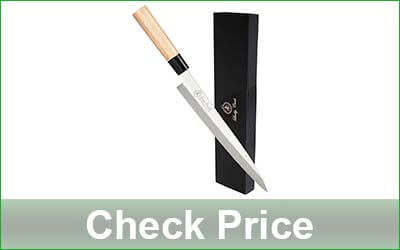
The shipment arrived two days ahead of schedule, packed in a sturdy black gift box with a magnetic closure. Inside, the knife was secured in a protective red interior with a small plastic tip guard. Everything looked pristine during unboxing. The gleaming blade, spotless handle, and clean presentation made an excellent first impression.
Blade Quality & Craftsmanship: The blade is forged from 5Cr15MoV high-carbon stainless steel and measures 10 inches long, with a 55 HRC hardness rating. The single-bevel edge is set at 20 degrees and comes hand-honed, ready to use straight out of the box.
Real-World Performance Testing: Over several weeks, I sliced sashimi-grade salmon and tuna with smooth, single-pull strokes. The blade glided through the fish without tearing the flesh. When cutting sushi rolls, one clean stroke kept each piece intact and evenly shaped.
Filleting boneless fish was equally smooth. The thin edge followed the natural contours of the fish without crushing or damaging the meat.
I also tested it on tomatoes, slicing them thin enough to see through, and trimmed boneless chicken breast using light downward pressure. Both tasks produced clean, even cuts.
Edge Retention: After several weeks of regular use, the edge remained sharp and required only occasional touch-ups with a whetstone.
Handle & Ergonomics: The Pakkawood handle has an oval profile that sits naturally in my palm. The craftsmanship feels solid, with a smooth, polished surface and no rough edges. It fits my large hand comfortably, while the secure grip stays reliable even when my hands are damp.
The blade and handle feel well balanced, making each slicing stroke controlled and predictable. That balance gave me more confidence during detailed cutting and helped reduce wrist strain during longer sessions.
Maintenance & Care Routine: I hand wash the knife with mild soap and dry it immediately with a towel because it is not dishwasher safe. I store it in the original box and avoid hard cutting surfaces. For sharpening, I use a 1000 to 6000 grit whetstone at a 20-degree angle on the beveled side only.
Pros
- Razor-sharp straight out of the box
- Attractive polished mirror finish
- Slices sashimi without tearing
- Holds its edge for weeks
- Comfortable, well-balanced Pakkawood handle
- Elegant, gift-ready presentation box
- Easy to sharpen at home
- Excellent value for money
Cons
- Designed for right-handed users
- Plastic bolster feels somewhat basic
- Requires careful hand-washing routine
2. SANMEIHO 10-Inch Japanese 5Cr15MoV High Carbon Stainless Steel Sushi Knife

My SANMEIHO knife arrived two days ahead of schedule in a sturdy black gift box, secured inside with plastic padding and a protective polyethylene wrap. A plastic tip guard protected the blade during shipping. The knife looked spotless, sharp, and well finished straight out of the packaging.
Blade Quality & Craftsmanship: The 10-inch blade is crafted from Japanese 5Cr15MoV high-carbon stainless steel with a cobalt addition, featuring a silver finish, 57 HRC hardness, a plain edge, and a 12-degree edge angle. It arrived razor sharp and ready for immediate slicing.
Real-World Performance Testing: I used this long, narrow knife regularly for several weeks while preparing sushi dinners at home. I sliced salmon and tuna for sashimi, and the blade glided through each fillet in one long pull. The cuts were clean and smooth without tearing the flesh throughout testing. Slicing sushi rolls was equally clean, with no crushing around the edges.
Filleting whole sea bass and salmon went smoothly too, as the thin edge followed the bones with little resistance.
Beyond seafood, I tested it on beef steak and diced onions, and both tasks felt controlled and precise, with the blade maintaining its line through denser cuts.
Edge Retention: After several weeks of regular use, the edge remained sharp, requiring only a light touch-up to stay precise.
Handle & Ergonomics: The red sandalwood handle has an octagonal profile with full-tang construction that feels sturdy. The wood grain finish looks clean, with no rough edges near the bolster. The octagonal shape sits naturally in my palm, and even with wet hands, the handle kept my grip secure and comfortable without slipping.
Its balanced weight gave me steady control during delicate prep sessions, and my hand never felt strained from the weight. I appreciated the smooth craftsmanship around the octagonal edges because the handle felt nimble in my palm rather than irritating while handling a variety of slicing tasks.
Maintenance & Care Routine: I hand wash the blade with warm, soapy water, dry it immediately with a soft towel, and store it in the included box. I avoid frozen foods and bones. A 1000-grit whetstone followed by 3000 to 6000 grit at a 12-degree angle keeps the edge performing well, with regular honing using a honing steel.
Pros
- Japanese steel feels premium
- Razor sharp right out of the box
- Excellent fish slicing performance
- Comfortable octagonal sandalwood handle
- Full-tang design feels sturdy
- Well-balanced weight distribution
- Easy to resharpen at home
- Great cutting performance for the price
- Beautiful gift box included
Cons
- No sheath for blade protection
- Sharpness may vary between units
- Requires careful handling when sharp
- Better suited for right-handers
3. KAI Wasabi 8.25-Inch 1K6 High-Carbon Stainless Steel Black Yanagiba Knife
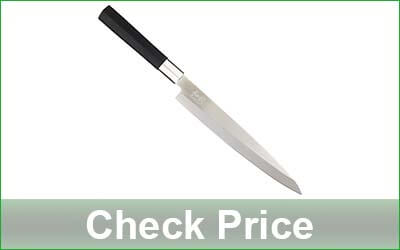
My Wasabi sushi knife arrived a few days after placing the order in basic retail packaging with a plastic interior that securely enclosed the blade. Inside, I found only the knife, which looked spotless, sharp, and well crafted.
Blade Quality & Craftsmanship: The single-bevel blade is made from Daido 1K6 high-carbon stainless steel and features a glazed finish with an 8.25-inch stamped construction and 57 HRC hardness. It arrived razor sharp, hand sharpened to a 16-degree edge, and ready for slicing.
Real-World Performance Testing: I have used this knife regularly for about two months, mainly slicing raw fish for sashimi. Pulling the blade through tuna with full-length strokes produced clean, thin cuts every time while keeping the fillets intact. Salmon sliced just as smoothly, and the single bevel helped prevent pieces from sticking to the blade. Cutting sushi rolls worked well too, with the long edge slicing through an entire roll in one pass.
I also tried it on cooked turkey using long drawing cuts that stayed controlled and even, carving through the meat cleanly. Tempura shrimp glided through like butter. On paper, the edge moved through effortlessly, confirming the sharpness I noticed from day one.
Edge Retention: After weeks of regular sushi preparation, the edge stayed sharp through more than twenty rolls before needing a touch-up and responded well whenever I refreshed it on a whetstone.
Handle & Ergonomics: The handle is made from polypropylene blended with bamboo powder and shaped in the traditional Japanese D-profile. Its lightweight stamped construction kept the knife easy to control, while the forward balance suited smooth slicing strokes.
The matte finish offered a secure grip when dry, although those with larger hands like mine may prefer a thicker handle diameter. The grip felt slightly tight during long sessions, and I noticed it became somewhat slippery with wet hands.
Maintenance & Care Routine: I always hand washed the blade with mild soap, dried it immediately with a soft towel, and stored it in a protective sleeve. I maintained the single bevel with 1000 and 6000 grit whetstones at a 16-degree angle and avoided electric sharpeners and the dishwasher.
Pros
- Crafted by a Japanese knifemaker
- Razor sharp out of the box
- Excellent sushi slicing performance
- Good edge retention overall
- Lightweight and easy to handle
- Easy whetstone sharpening experience
- Excellent value for the price
- Corrosion-resistant stainless steel blade
- Lifetime warranty included
Cons
- No protective sheath included
- Handle feels small for some users
- Grip becomes slippery when wet
- Designed for right-handed users only
- Blade feels slightly lightweight
4. SUMTEENE 9.5-Inch 440A High Carbon Stainless Steel Sushi Knife
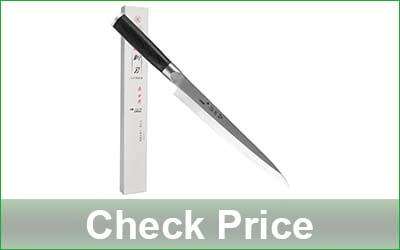
My package arrived on time in an attractive gift box with secure presentation packaging. The knife looked clean and well protected during unboxing, showcasing the 9.5-inch blade and pakkawood handle.
Blade Quality & Craftsmanship: The 440A high-carbon stainless steel blade features a polished finish, 9.5-inch length, HRC 50-55, hand-forged construction, tempered and quenched treatment, and a single-bevel edge. It arrived sharp but needed some final sharpening for peak performance.
Real-World Performance Testing: Over several weeks, I sliced sashimi salmon using one long pull from heel to tip, and the blade moved smoothly through the flesh without tearing. Cutting sushi rolls required the full blade length in one motion, leaving the rice intact. Filleting whole fish involved following the bone line with shallow angled strokes for clean separation. I also sliced pork tenderloin against the grain, and the knife handled boneless poultry breasts with light, controlled pressure without crushing.
Edge Retention: After several weeks of testing, the blade retained a dependable sharp edge with regular care and proper use.
Handle & Ergonomics: The pakkawood handle has a polished ergonomic design with a comfortable profile that fits my hand naturally. Its smooth construction and balanced weight distribution provide confident control during slicing sessions. The handle feels solid and refined, while the seamless blade-to-handle connection adds reassurance. Its size and texture helped me maintain a steady grip without discomfort during longer food preparation tasks.
Maintenance & Care Routine: I hand wash this knife with mild soap and dry it immediately with a towel after use. I avoid dishwashers, hard surfaces, and frozen foods. I sharpen it using a 1000/6000-grit whetstone at a 15-degree angle and use honing steel carefully between sharpening sessions.
Pros
- Hand-forged craftsmanship feels premium
- Sharp single-bevel slicing performance
- Comfortable pakkawood handle grip
- Balanced weight during preparation
- Attractive gift box included
- Good corrosion resistance from steel
- Versatile fish and meat slicing
Cons
- Needs sharpening before first use
- No dedicated blade sheath included
- Designed mainly for right-handed users
- Softer steel requires regular maintenance
5. RONDAUNO 10-Inch Japanese High Carbon Stainless Steel Sashimi Knife
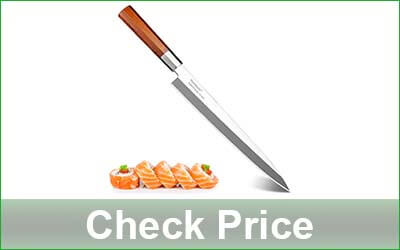
I got the package right on time from the delivery man in good condition. The cardboard box held the knife securely with a plastic holder, light polythene wrap, and plastic guards on the tip and heel. The sushi knife looked shiny and undamaged.
Blade Quality & Craftsmanship: The 10-inch forged high-carbon Japanese stainless steel blade features a plain single-bevel edge set around 10 to 15 degrees with a polished finish. It came genuinely sharp and ready to slice straight out of the box.
Real-World Performance Testing: Over several weeks, I sliced tuna using long, controlled draws, and the blade moved through each cut cleanly without tearing the flesh. Using a smooth single-pull stroke, it produced clean, thin sashimi slices from salmon without tearing. For sushi rolls, the edge cut through rice and seaweed precisely without compressing the roll.
Filleting a whole fish separated the meat from the bone with minimal waste. I also tried raw meat, and the thin slices came out even and clean using the same pulling technique.
Edge Retention: After a month of use, the edge remained sharp with only occasional honing between slicing sessions.
Handle & Ergonomics: The octagonal red sandalwood handle uses full-tang construction and has a clean finish without rough spots or gaps. It fits my large hand comfortably and provides a secure grip, even with slightly wet hands.
After longer fish preparation, I noticed the balance felt stable and controlled, but the front-heavy weight became noticeable and caused some wrist fatigue. Still, the octagonal grip remained nimble and comfortable to hold, and I felt no irritation on my palm.
Maintenance & Care Routine: I hand wash the blade with mild soap, dry it immediately with a clean towel, and never place it in the dishwasher. I store it on a magnetic strip, avoid glass or stone cutting boards, sharpen it on a 1000 to 6000 grit whetstone at a 10 to 15-degree angle, and hone the edge regularly.
Pros
- Traditional Japanese blade design
- Arrives razor sharp right away
- Attractive polished blade finish
- Good corrosion resistance
- Handles sashimi and sushi well
- Comfortable octagonal wood handle
- Full tang adds real strength
- Great beginner sushi knife
- Excellent value for money
Cons
- Front-heavy during extended use
- No storage sheath included
- Requires immediate drying every time
- Sharpening takes proper technique
- Not ideal for professionals
6. MERCER CULINARY 10-Inch High-Carbon German Stainless Steel Yanagi Sashimi Knife
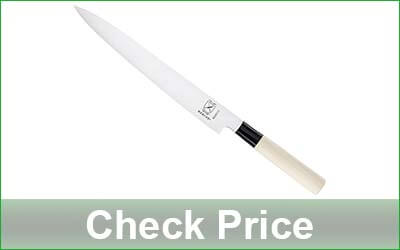
My knife arrived promptly in solid packaging, unmarked and undamaged. Unboxing revealed just the blade itself, no sheath, no extras, just wrapped simply and ready for inspection.
Blade Quality & Craftsmanship: The 10-inch high-carbon German steel blade is stamped, taper-ground, and finished with fine stone polishing. Its single-bevel plain edge arrived razor sharp and ready to use.
Real-World Performance Testing: For sashimi, I used a gentle pull-slice and got clean cuts through tuna and salmon without crushing the flesh. With halibut and fish fillets, the long blade handled smooth slicing and skinning work with little pressure. I also sliced sushi rolls with a single long pull, wiping the blade between cuts to keep pieces clean. Separately, I tested it on beef, slicing thin cuts with the same pulling motion, and on vegetables like tomatoes, where the taper-ground edge sliced through skin without dragging or tearing the flesh.
Edge Retention: After repeated use, the blade continued holding a sharp edge, with customers reporting years of reliable performance and easy touch-ups.
Handle & Ergonomics: The traditional wood handle keeps the knife light at 5.3 ounces and feels comfortable during precise pull cuts. I found the simple profile easy to control, with good balance between the handle and long blade. The unfinished surface feels coarse and less refined than the blade, and some users found it flimsy. Sealing the wood with food-safe oil improves protection and durability.
Maintenance & Care Routine: I hand wash it with warm water and mild soap, then dry it immediately with a soft towel. I avoid soaking and the dishwasher. For sharpening, a 6000-grit whetstone followed by a leather strop restores the edge. I store it in a sheath or cutlery block.
Pros
- Razor sharp straight from box
- Excellent fish slicing performance
- Strong edge retention over time
- High-carbon German steel blade
- Lightweight and comfortable handling
- Well-balanced traditional design
- Excellent value for price
- Easy to sharpen with whetstone
- Suitable for sushi and meat
- Limited lifetime warranty
Cons
- Unfinished wooden handle feels rough
- No protective sheath included
- Long blade needs careful storage
- Handle requires extra protective treatment
7. KAKUSEE 5-Piece Stainless Steel Sushi Knife Set
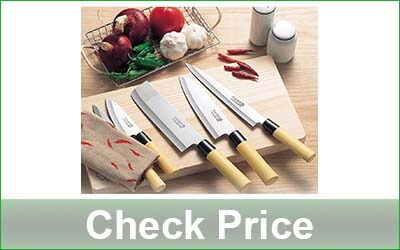
My set arrived in good condition in an attractive wooden box with blade covers, giving the five knives a neat, gift-ready presentation and secure storage.
Knife Set Includes: Approx. 17 cm: Sushi/Sashimi Knife, Vegetable Nakiri Knife, Chef’s Knife, Petty Knife, Small Deba Knife, wooden box case.
Blade Quality & Craftsmanship: The polished stainless steel blades are about 17 cm long and arrived sharp; the data lists hand-forged construction elsewhere as stamped, while HRC and heat treatment remain unspecified.
Real-World Performance Testing: I used the sushi knife for raw fish and sashimi, pulling the blade from heel to tip in one smooth motion to keep slices clean. For vegetables, I used the nakiri with a straight push cut on carrots, onions, zucchini, and leafy greens, while the chef’s knife handled bacon and general meat slicing cleanly. The petty knife worked well for smaller detail jobs, including peeling and precise trimming. The blades stayed sharp through regular use, but daily users reported needing weekly sharpening. I also found the thin blades worked best when kept clean and dry between cuts.
Edge Retention: With regular daily use, the edge stayed useful between touch-ups, but weekly sharpening kept the blades performing their best.
Handle & Ergonomics: The handles are listed as wood, but customer experience reports a plastic-like feel and a simple, smooth design. They are lightweight, comfortable to hold, and easy to control during longer prep sessions. The thin profile suits smaller hands well, and the rounded shape works comfortably from either hand. The main weakness is durability: users reported flaking paint, cracking, loose blades, and handles separating after months of regular use.
The Storage: The natural wood box holds all five knives and includes blade covers that protect the edges during storage, while keeping the set compact and giftable.
Maintenance & Care Routine: I would hand wash each knife with warm soapy water, dry it immediately, and never leave moisture on the blade. I would use the wooden case and blade covers for storage, avoid scraping the board with the edge, and use a 1000/6000-grit whetstone at about 15-20 degrees. A honing steel between sharpenings helps maintain the edge.
Pros
- Sharp right out of box
- Five useful knife types
- Lightweight and comfortable handling
- Thin blades slice cleanly
- Easy to sharpen
- Attractive wooden storage case
- Protective blade covers included
- Good value for money
Cons
- Handles can deteriorate quickly
- Blades require frequent sharpening
- Rust requires careful drying
- Handle construction lacks durability
8. HIROSHI 4-Piece High Carbon Stainless Steel Sushi Knife Set
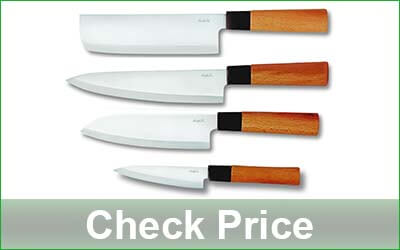
My set arrived in a compact cardboard box with the four knives secured in a plastic tray. The contents looked clean and intact, with no dedicated blade covers included.
Knife Set Includes: 6.5-inch Sashimi/Sushi Knife, Chef’s Knife, Filleting/Meat Knife, Paring Knife, no knife block included.
Blade Quality & Craftsmanship: The high-carbon stainless steel blades have a polished finish and thin 6.5-inch profile. They are hand-forged through 40 steps, with HRC and heat treatment unspecified, and arrived sharp with an approximately 15-degree edge.
Real-World Performance Testing: I used the sushi knife for raw fish, making smooth single-pull slices through sashimi without sawing, and it kept the cuts clean instead of shredding. The chef knife handled vegetables, herbs, and fruit well with controlled chopping and slicing motions. I also used the meat knife on cooked and raw meat, following the grain and working along bones for cleaner separation. For smaller jobs, the paring knife handled peeling, trimming, and deveining with good hand control. After several weeks of regular use, I found the edges still performed well, but the thin blades benefited from light honing between uses.
Edge Retention: After several weeks of regular use, the blades stayed sharp when I maintained them with light honing between cutting sessions.
Handle & Ergonomics: The handles are made from lightweight beech wood with a rounded ergonomic shape that felt natural in my hand. Their slender profile suited precise Japanese-style cutting, and the low weight kept fatigue down during longer prep sessions. I liked the balance and blade-forward feel, especially for slicing. The fit and finish around the ferrule and tang felt less refined, and the handle connection raised durability concerns during regular use.
The Storage: No sheath, blade cover, block, or case came with my set, so I had to arrange separate storage to protect the edges and keep the knives safely contained.
Maintenance & Care Routine: I hand washed each knife with warm soapy water and dried it immediately with a soft towel. I kept the wooden handles dry and stored the knives away from moisture. I avoided the dishwasher, rough cutting surfaces, bones, and other hard foods. For sharpening, I used a fine whetstone around 1000 to 3000+ grit at about 15 to 20 degrees, then used light honing between sharpenings.
Pros
- Sharp enough for precise slicing
- Lightweight handles reduce hand fatigue
- Comfortable rounded grip design
- Good balance during slicing
- Thin blades make clean cuts
- Easy to sharpen and maintain
- Useful for varied kitchen tasks
- Attractive traditional Japanese-style appearance
Cons
- Tang didn’t feel very substantial
- No protective storage included
- Needs frequent honing between uses
- Handle fit felt a bit rough
FAQs About the Best Sushi Knife Under $50
Question: What should I look for in the best yanagiba knife under $50?
Answer: Look for a single bevel blade, sharp edge, comfortable handle, suitable length, and corrosion-resistant steel. These features help create clean, precise cuts without spending more than $50 comfortably overall.
Question: What blade length is best for a sushi knife under $50?
Answer: Around 8 to 10 inches works well for most home sushi preparation. It provides enough cutting length for fish while remaining easy to control during slicing and portioning at home.
Question: Can a sushi knife under $50 perform well?
Answer: Yes, a sashimi knife under $50 can perform well when properly sharpened and maintained. Focus on blade geometry, steel quality, edge sharpness, and handling rather than price alone when choosing one.
Question: Is a single bevel or double bevel better for sushi?
Answer: A single bevel is traditional for sushi because it supports precise slicing. Double bevel knives are easier for beginners and can handle a wider range of other everyday kitchen tasks.
Question: Which steel is best for an under-$50 sushi knife?
Answer: High carbon stainless steel offers a useful balance of sharpness, edge retention, corrosion resistance, and maintenance. For home sushi preparation, it provides reliable performance without excessive daily upkeep or care.
Question: Can I use a yanagi knife under $50 for other foods?
Answer: Yes, but avoid twisting or cutting bones and frozen foods. Use the knife for slicing boneless fish and other soft ingredients, then clean and dry it thoroughly after each use.
Question: How should I clean a sushi knife after use?
Answer: Wash the blade by hand with mild dish soap, rinse it thoroughly, and dry it immediately. Avoid dishwashers because heat, moisture, and detergents can damage knife finishes permanently over time.
Question: Is a 10-inch sushi knife too long for beginners?
Answer: Yes, a 10-inch blade suits larger fish portions and long slicing movements. An eight-inch knife is easier to control when preparing smaller portions or working in limited spaces.
Question: Do I need a protective sheath for a sushi knife?
Answer: A knife guard protects the edge from accidental contact and helps prevent damage during storage. Keep the knife dry, protected, and separate from other utensils whenever possible, safely at home.
Question: What features make an under $50 sashimi knife worth buying?
Answer: Look for a straight, comfortable handle, secure construction, sharp edge, corrosion-resistant steel, protective sheath, and balanced weight. A reputable brand with positive user feedback also helps narrow down choices.